

Choosing a Frosted Glass Front Door in 2026 requires more than matching a frame to your façade. It is a daily decision about privacy, daylight, security, energy use, and maintenance. A clear panel may brighten a narrow hallway, but it can also reveal coats, shoes, or movement after sunset. Acid-etched glass offers a soft, permanent texture, while laminated frosted glass can provide better impact resistance and noise control. Consider your climate, entrance direction, and indoor lighting before comparing finishes. Small details matter. Handle height matters. So does the shadow cast across the floor at noon.
Glass-performance specialist Helen Sanders often stresses, “The right glass balances performance, aesthetics, and safety.” That principle should guide every Frosted Glass Front Door shortlist. Look for insulated units with low-emissivity coatings when winter heat loss or summer glare is a concern. Ask whether the glass is tempered or laminated, and request documented performance ratings from the manufacturer. A reliable installer should explain edge seals, drainage, hinges, and threshold protection without rushing your decision. Check local building requirements, too.
Style can still lead the conversation. Rippled, satin, and geometric textures create different levels of privacy. Some fingerprints will appear. They usually do. Dark frames may look elegant, yet dust becomes more visible. I once underestimated that detail on a sample display. It changed my recommendation. The best choice is not always the most dramatic door. It is the one that welcomes daylight, protects your routines, and remains practical after thousands of ordinary openings.
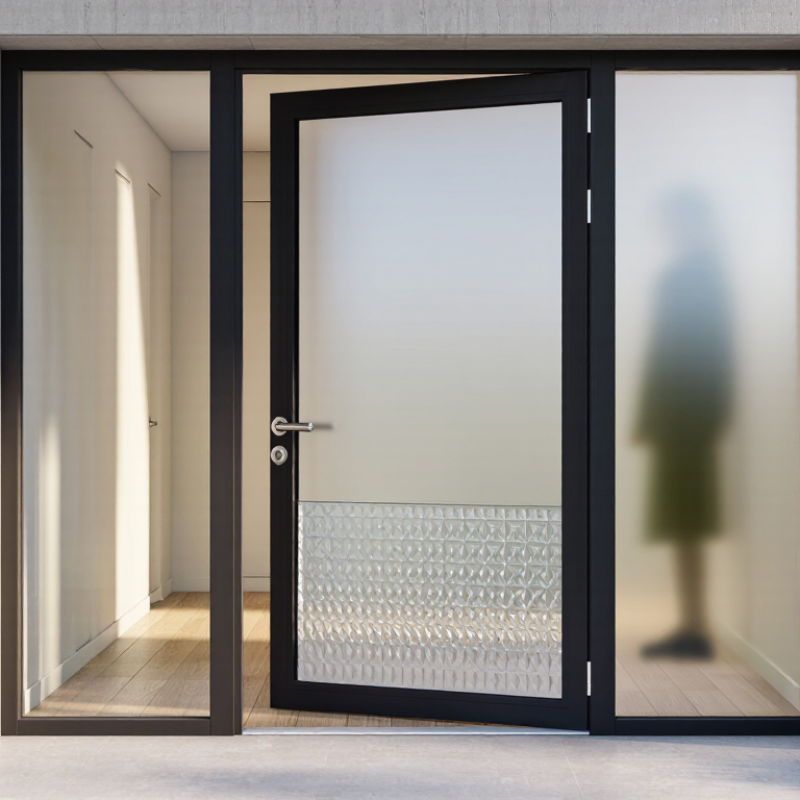
Frosted glass is not one privacy level. Its appearance depends on the finish, thickness, lighting, and viewing distance. Acid-etched glass gives a soft, even blur. Sandblasted glass feels more opaque, but fingerprints can reveal darker marks. Textured glass breaks outlines with patterns, while laminated glass can add a diffusing interlayer. Privacy ratings are not globally standardized, so ask for a physical sample.
Test it at night. Stand outside while a lamp sits behind the door. Can you identify a face, jacket, or hand movement? If yes, the panel offers privacy, but not concealment. A fully obscured finish may still transmit bright shapes. This detail is often missed.
Energy performance matters too. The U.S. Department of Energy estimates that windows can cause 25–30% of residential heating and cooling energy use. The 2024 Global Status Report for Buildings and Construction reports that buildings consume about 32% of global energy. A frosted entry door should therefore include a suitable U-factor and visible-transmittance rating, not just attractive glass. The National Fenestration Rating Council label can help compare these figures. Lower U-factor generally means better insulation. Yet numbers alone can mislead. A poorly sealed frame may waste more energy than the glass. Check the weatherstripping, warm-edge spacer, and frame alignment before choosing the finish.
Understanding Frosted Glass Front Door Types and Privacy Levels
Privacy scores use a practical 1–5 comparison based on typical visual obscuration: 1 indicates clear or detailed visibility, while 5 indicates strong obscuration of shapes and movement. Actual privacy depends on lighting, viewing distance, glass thickness, texture, and whether blinds or curtains are used.
How to Choose a Frosted Glass Front Door in 2026?
Energy performance should guide the design, not just appearance. The U.S. Department of Energy reports that windows can cause 25%–30% of residential heating and cooling energy use. Choose insulated frosted glass with a low-e coating, a suitable U-factor, and a climate-appropriate solar heat-gain coefficient. A tight frame and quality weatherstripping also matter. Even excellent glass performs poorly when cold air slips around the threshold.
Safety requires more than privacy. The National Glass Association states that tempered glass is approximately four times stronger than annealed glass. It also breaks into smaller pieces. Laminated glass can retain fragments after impact. For a main entrance, I would consider laminated or laminated-tempered units, especially beside the handle and in narrow sidelites. Check that the glass carries a recognized safety-glazing certification. Frosting hides fingerprints, but it does not hide weak installation. That part is often underestimated.
Tips: Ask for the complete NFRC label, not a vague “energy-saving” claim. Inspect the spacer and frame corners for gaps. Touch the interior glass on a cold morning. Uneven chill may reveal poor sealing. Confirm the frosting method, because surface films can scratch more easily than etched glass. I would also question unusually low prices. Long-term durability depends on edge seals, drainage, and professional fitting, not glass thickness alone. According to the U.S. Department of Energy, air leakage remains a major source of door energy loss. Small gaps matter.
How to Choose a Frosted Glass Front Door in 2026?
Choosing Door Materials, Styles, Hardware, and Opening Designs
A frosted glass front door should balance privacy, daylight, security, and maintenance. Laminated or tempered glass offers practical protection and safer breakage behavior. Fiberglass resists moisture well, while solid timber provides warmth but needs regular sealing. I once favored a heavily textured panel, yet evening shadows made the entry feel darker than expected. Test glass samples near your actual porch light before ordering.
Choose a style that suits the building, not only current trends. A slim frame creates a cleaner look, while wider rails can support traditional architecture. Hardware deserves equal attention. A long lever is easier to operate than a small knob, especially with wet hands. Select corrosion-resistant finishes for exposed entrances. Check the lock position, handle height, and clearance for coats, parcels, and mobility needs. Small details matter.
Tips: Compare swing directions on the floor with masking tape. Confirm local building requirements with a qualified installer. Inward openings may simplify maintenance, but outward openings can improve interior space. Weather exposure also changes the decision. I would not choose a design before checking wind, drainage, and threshold height. Frosted glass can still reveal movement at night, so add a sidelight, curtain, or layered privacy treatment when needed.
| Decision Area | Option | Typical Characteristics | Privacy Level | Maintenance | Best Use |
|---|---|---|---|---|---|
| Door Material | Fiberglass | Resists moisture, rust, and many dents; commonly available with insulated cores and factory finishes. | High | Low | Most climates and homeowners seeking a balanced performance-to-maintenance option. |
| Insulated Steel | Strong and generally economical; exposed scratches or damaged finishes should be repaired to limit corrosion. | High | Low–Medium | Security-focused entrances and locations where impact resistance is important. | |
| Solid Wood | Natural appearance and good visual warmth; requires suitable sealing and periodic finish maintenance. | High | Medium–High | Covered entrances and designs that prioritize traditional craftsmanship. | |
| Aluminum or Composite Frame | Lightweight and resistant to rot; thermal performance depends strongly on frame design and thermal breaks. | Medium–High | Low | Contemporary entrances and larger glazed door systems. | |
| Frosted Glass Type | Acid-Etched Glass | Uniform translucent surface with a soft appearance; fingerprints and oils may be more visible on the treated face. | High | Medium | Minimalist designs requiring consistent light diffusion. |
| Sandblasted Glass | Matte texture created by abrasion; surface treatments or protective coatings can help with cleaning and staining. | High | Medium–High | Custom patterns and decorative privacy panels. | |
| Patterned or Textured Glass | Uses a molded or embossed surface to distort views; privacy varies by pattern and viewing distance. | Medium–High | Low–Medium | Traditional, transitional, or decorative entry styles. | |
| Laminated Privacy Glass | Two glass layers bonded with an interlayer; if broken, fragments generally remain attached to the interlayer. | High | Low | Entrances needing enhanced acoustic, ultraviolet, or impact-related performance; verify local requirements. | |
| Door Style | Full-View Frosted Glass | Large glazed area maximizes daylight while maintaining privacy; frame, glass, and edge details become prominent design elements. | High | Medium | Dark entry halls and contemporary façades. |
| Half-Glass or Mid-Rail | Balances daylight and privacy with a larger solid lower section for visual weight and durability. | High | Low–Medium | Family homes and transitional architecture. | |
| Vertical Narrow-Lite | A slim glass panel provides daylight and a controlled view while leaving more structural door area. | Medium–High | Low | Narrow façades or homeowners wanting limited glazing. | |
| Geometric or Custom Pattern | Uses lines, bands, or motifs to combine privacy with a distinctive focal point; custom work may increase lead time. | Medium–High | Medium | Statement entrances and coordinated façade designs. | |
| Hardware | Lever Handle | Easy to operate with the hand or forearm; choose a finish and grade suitable for exterior exposure. | — | Low | Everyday residential use and accessibility-conscious layouts. |
| Pull Handle with Separate Lock | Creates a strong modern appearance; requires careful alignment between the pull, latch, deadbolt, and strike. | — | Low | Large contemporary doors and statement entrances. | |
| Single-Cylinder Deadbolt | Keyed outside with a thumb-turn inside; suitability depends on local safety rules and door configuration. | — | Low | Common residential security arrangement; confirm egress requirements. | |
| Electronic or Smart Lock | May support codes, app control, or temporary access; requires batteries, backup entry, and compatible door preparation. | — | Medium | Keyless access and connected-home installations. | |
| Opening Design | Inswing Single Door | Opens into the home and is widely used; requires clear interior floor space and correctly positioned furniture. | — | Low | Most standard residential entry layouts. |
| Outswing Single Door | Preserves interior space; threshold, weather exposure, exterior clearance, and local code requirements need review. | — | Medium | Compact vestibules or entrances where interior clearance is limited. | |
| Single Door with Sidelite | Adds daylight and visual width; use privacy glass and verify structural support for the expanded opening. | High | Medium | Wider façades and entries that need more natural light. | |
| Double or French Doors | Creates a broad opening; inactive-door bolts, meeting-stile alignment, and sufficient swing clearance are essential. | High | Medium | Grand entrances and homes requiring a wider passage. | |
| Performance Checks | Safety Glass | Use tempered or laminated safety glazing where required by applicable building codes, especially near floors, doors, and walking surfaces. | — | Low | All glazed entry doors; confirm the exact code requirements for the installation. |
| Insulated Glazing | Double glazing generally improves insulation compared with single glazing; compare the published U-factor and solar heat gain data. | — | Low | Cold, mixed, or hot climates where energy performance matters. | |
| Weather Seals and Threshold | Continuous seals and a properly adjusted threshold help reduce drafts and water intrusion; installation quality is critical. | — | Medium | Exposed entrances and regions with wind-driven rain. | |
| Thermal Breaks and Frame Depth | Thermally improved frames can reduce heat transfer; match the frame depth, sill, and rough opening to the wall system. | — | Low | Metal-framed doors and projects targeting improved comfort. |
Selection note: Confirm local building-code requirements, accessibility clearances, safety-glazing locations, door handing, rough-opening dimensions, wind exposure, and the manufacturer's tested performance data before ordering.
How to Choose a Frosted Glass Front Door in 2026?
Matching frosted glass with architecture starts with proportion, not decoration. A narrow vertical panel suits a tall townhouse entrance and draws the eye upward. Wide, lightly frosted glass feels more natural beside horizontal modern lines. Craftsman homes often benefit from textured glass, warm wood, and divided panels. Mediterranean façades can accept softer patterns with bronze or black framing. Avoid copying a showroom door blindly. The surrounding roofline, brick tone, and hardware should guide the decision.
Lighting changes the result dramatically. The National Fenestration Rating Council explains that visible transmittance measures how much daylight passes through glazing, from low to high values. Choose higher transmittance for shaded porches, but use stronger diffusion near bright southern exposures. The U.S. Department of Energy identifies daylighting as a practical way to reduce electric-light demand when glare is controlled. Test it at dusk. A sample may look elegant indoors but appear too transparent under porch lighting. I once underestimated this effect.
For privacy, dense acid-etched or laminated textures work well beside street-facing rooms. Softer patterns can preserve more daylight in darker hallways. Check the complete door assembly, including sidelites, frame, weather seals, and safety glazing documentation. The 2024 International Residential Code requires safety glazing in many hazardous locations, including doors and adjacent panels. Local rules still vary. Measure the entry from outside at morning, noon, and evening. That small exercise often reveals a better glass choice than a catalog photograph.
How to Choose a Frosted Glass Front Door in 2026?
Planning should begin with climate, orientation, and frame condition. A north-facing entrance may need less solar control than a west-facing door. Measure the rough opening before ordering glass or hardware. A small error can create expensive site adjustments. In practice, I would request an NFRC-rated door assembly, not glass alone. The label reports U-factor and solar heat gain coefficient. Lower U-factor generally means better insulation. The U.S. Department of Energy also recommends continuous weatherstripping and durable perimeter sealing for entry doors.
Frosted glass improves privacy, but patterns affect daylight and cleaning. Ask for laminated or tempered safety glazing where local codes require it. Confirm how the frosting is produced. Surface films can scratch, peel, or trap moisture over time. That detail is easy to miss. Use mild soap and a soft cloth, especially near sandy walkways. Inspect hinges, sweeps, seals, and drainage channels twice yearly. A neglected bottom seal can undermine an otherwise efficient door.
Budget for removal, structural preparation, flashing, hardware, disposal, and future resealing. The 2024 Cost vs. Value Report recorded a 188.1% cost recoupment for a steel entry-door replacement, but that figure does not represent every frosted-glass design. Local labor can change the result sharply. Request itemized quotations and warranty terms. I would also compare winter comfort after installation, not only the showroom appearance. Beautiful doors can perform poorly. Resistant finishes, replaceable seals, and accessible hardware usually matter more over ten years.
|
This is a medical device. |