How to Choose the Right Medical Products for Your Needs?
Choosing the right medical products for your needs is essential for your health and well-being. The global medical products market was valued at around $5 trillion in 2022, as reported by industry experts. With such a vast array of options, navigating this landscape can feel overwhelming. Consumers must understand their unique requirements and evaluate products accordingly.
When selecting medical products, it's important to consider safety, efficacy, and personal preferences. Reports indicate that about 40% of users struggle to find suitable products. This highlights the need for informed decision-making. For example, individuals with chronic conditions may require specialized devices or supplies tailored to their unique situations.
Additionally, the quality of medical products cannot be overstated. A recent study found that 30% of medical devices had varying levels of performance against expectations. This inconsistency emphasizes the importance of thorough research and critical thinking. Ultimately, making informed choices about medical products can significantly impact health outcomes and overall quality of life.

Understanding Your Health Needs and Conditions
Understanding your health needs and conditions is vital in selecting the right medical products. Many consumers fail to assess their specific health requirements. As per a recent survey, only 30% of individuals actively consider their health conditions when purchasing medical products. This oversight can lead to unsuitable choices that don't effectively address their needs.
For instance, those managing chronic conditions like diabetes or arthritis must prioritize products tailored to their specific situation. A report by the World Health Organization highlights that 80% of people with chronic illnesses do not follow recommended product guidelines. This gap can result in complications and ineffective management of health issues. It's crucial to evaluate personal conditions thoroughly.
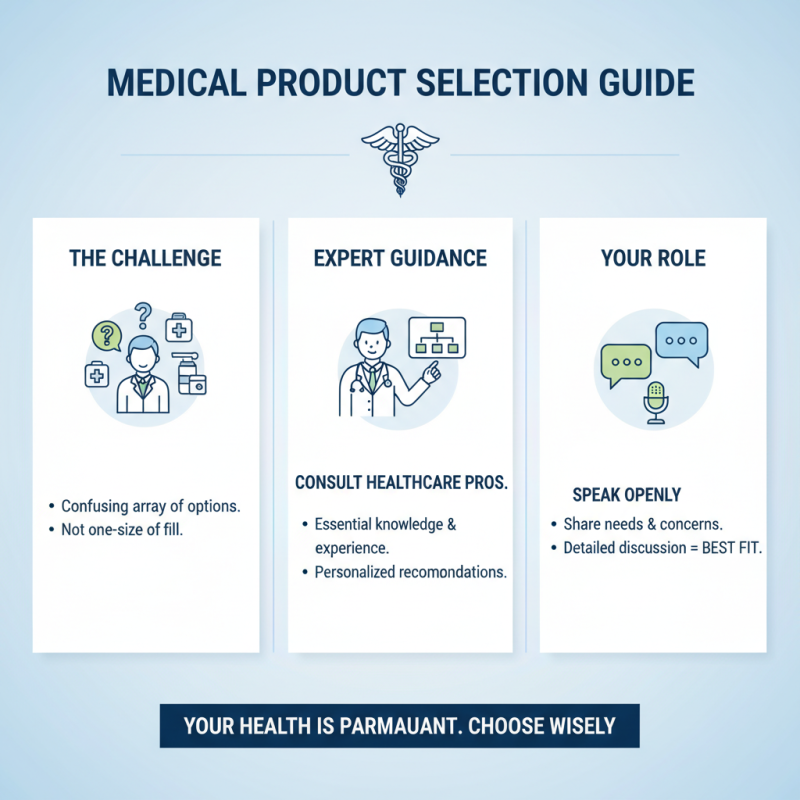
Additionally, consider consulting healthcare professionals. Many users overlook expert advice. This can impact the effectiveness of their chosen medical solutions. According to a study published in the American Journal of Managed Care, proper guidance improves product satisfaction by 40%. Yet, many still navigate these decisions alone, risking wellbeing. Thus, reflect on your health needs and seek out tailored solutions.
Identifying Types of Medical Products Available
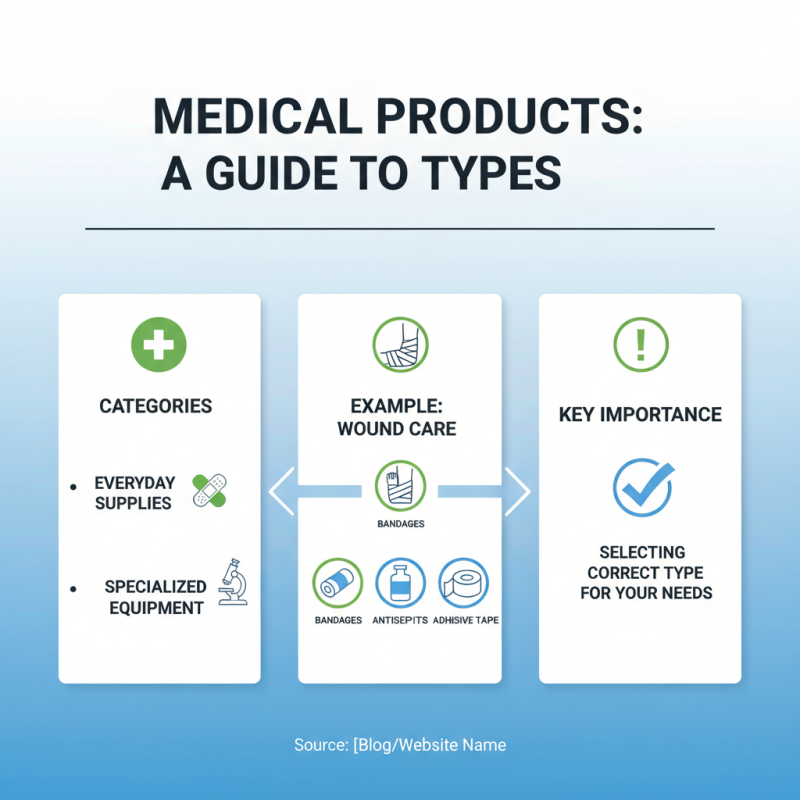
When choosing medical products, it’s essential to understand the types available. Medical products range widely from everyday supplies to specialized equipment. For instance, wound care supplies include bandages, antiseptics, and adhesive tape. These items often seem simple, but selecting the correct type for your needs matters greatly.
Another category is mobility aids. Wheelchairs, crutches, and walkers come in various styles and sizes. You might feel overwhelmed by options. Are they adjustable? Do they provide enough support? Proper fitting ensures comfort and safety during use. However, not every product is perfect for every individual. Often, personal trials are necessary to evaluate what works.
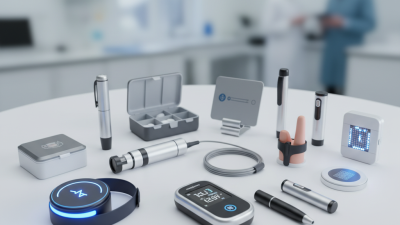
Consider diagnostic tools like blood pressure monitors and glucose meters. Understanding your medical needs influences your selection. Some users find technology too complicated or inaccurate. Reflecting on your own experiences can guide you to make better-informed decisions. With countless options, choosing wisely requires careful thought and personal insights.
Evaluating the Quality and Safety of Products
When evaluating the quality and safety of medical products, several factors come into play. It's crucial to research the materials used in these products. Some low-quality items may contain harmful substances or allergens. Look for products made from hypoallergenic materials whenever possible.
Tips for ensuring safety: Check for certifications from recognized authorities. These can provide insights into manufacturing standards. If a product lacks certification, consider it a red flag.
Reading user reviews is another essential step. Authentic feedback can reveal potential issues that may not be immediately apparent. Beware of overly positive reviews; they may not reflect true experiences. Always seek balanced perspectives to guide your choices.
Don't overlook product testing. Items that undergo extensive testing are often safer and more reliable. Ensure the testing process is transparent. Lastly, reflect on your specific needs. Not every product is suitable for everyone. Take your time and make informed decisions.
Evaluating Quality and Safety of Medical Products
Considering Budget and Insurance Coverage Options
When selecting medical products, it’s vital to consider your budget and insurance coverage. Prices can vary greatly. Some products might seem appealing but are not covered by insurance. Always check your policy details. Understand what your plan offers. You could save money by using in-network options.
Consider reaching out to your insurance provider for clarification. Ask specific questions about coverage limits. Sometimes, your plan may have a co-pay that affects your choice. Weighing quality against cost is necessary. A low-cost item might not meet your needs adequately. It's frustrating when it falls short.
Evaluate the balance between necessity and budget constraints. High-quality products are essential for health, but the expense is real. Reflect on past choices. Maybe previous selections were costly and ineffective. Learning from these experiences can guide future purchases. Adjusting expectations may be required, especially when finances are tight.
How to Choose the Right Medical Products for Your Needs? - Considering Budget and Insurance Coverage Options
| Product Type |
Estimated Cost ($) |
Insurance Coverage (%) |
Yearly Out-of-Pocket Cost ($) |
| Blood Pressure Monitor |
50 |
80 |
10 |
| Diabetes Test Strips |
300 |
60 |
120 |
| Inhaler |
75 |
75 |
18.75 |
| Mobility Aid (Walker) |
200 |
50 |
100 |
| CPAP Machine |
1200 |
70 |
360 |