

Sourcing high-quality Chili Powder globally is not simply a search for the reddest or hottest product. It requires disciplined evaluation from farm to finished shipment. Buyers must examine the chili variety, growing region, harvest date, drying method, milling conditions, and storage environment. A brilliant color can look impressive, yet it may hide weak aroma, excessive moisture, or inconsistent pungency.
Dr. V. A. Parthasarathy, a respected Indian spice scientist, emphasizes a practical principle: “Quality must be protected from seed to shelf.” That idea guides responsible international sourcing. Reliable suppliers should provide clear specifications, representative samples, batch identification, and current laboratory reports. Testing should cover moisture, color value, capsaicin level, pesticide residues, aflatoxins, Salmonella, and unauthorized additives. The details matter. A damp warehouse, poorly sealed bag, or warm container can damage a carefully processed powder.
Experience also teaches caution. One successful sample does not prove consistent supply. Seasonal weather changes, crop disease, and farmer practices can affect each shipment. Even trusted suppliers need regular verification. Factory audits, production records, traceability checks, and independent testing reduce avoidable surprises.
The process is not perfect. Some buyers focus too heavily on price. Others accept paperwork without examining the physical product. A better approach combines sensory inspection with documented evidence. When the powder smells warm and fruity, pours freely, and matches its laboratory profile, confidence becomes more than a promise. This guide explains how global buyers can compare origins, assess suppliers, control risks, and build a dependable Chili Powder supply chain.
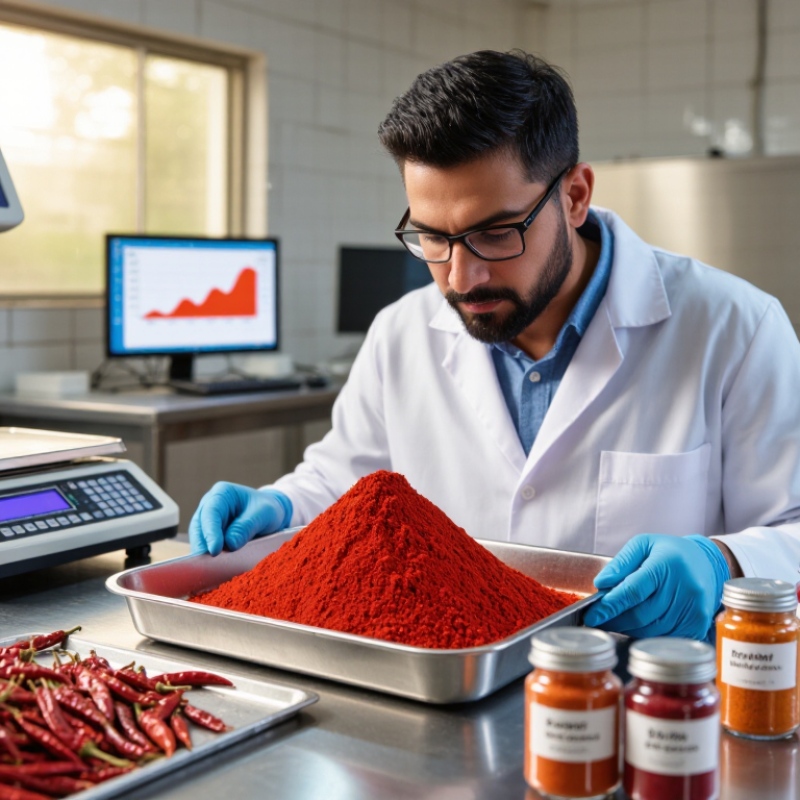
How to Source High Quality Chili Powder Globally?
Quality begins with measurable standards, not attractive color alone. Define acceptable moisture, particle size, color value, heat level, microbiological safety, and contaminant limits before requesting samples. FAO’s Statistical Yearbook 2023 reports that 13.2% of food is lost between harvest and wholesale. Poor drying and storage can damage chili powder long before shipment.
Use Codex guidance and destination-market rules as your technical baseline. For example, EU Regulation 2023/915 limits aflatoxin B1 in spices to 5 micrograms per kilogram, with total aflatoxins limited to 10 micrograms. Require laboratory testing for Salmonella, E. coli, pesticide residues, heavy metals, aflatoxins, moisture, and ASTA color value. ISO 6579-1 provides a recognized method for Salmonella testing. Supplier questionnaires help, but they cannot replace independent testing. A certificate can be correct and still describe the wrong lot.
Tips: Approve a retained reference sample for every shipment. Check seal integrity, lot codes, and carton dryness during loading. Test composite samples, not only one bag. Ask for the laboratory’s accreditation and method detection limits. FAO data supports tighter storage controls, yet our own inspections often reveal uneven particle size and fading color. Perfect specifications are impossible; documented deviations are more useful than pretending they never occur.
Reliable sourcing starts with the producing region, not only the supplier’s price. India, China, Peru, Spain, Mexico, and Türkiye offer different chili varieties, climates, and processing traditions. Dry, sunny regions may support efficient drying, while established agricultural areas often provide stronger traceability. However, regional reputation is not enough. Quality can vary between farms, harvests, and factories.
Choose suppliers who disclose the growing area, harvest season, processing method, and batch identification. Request recent laboratory reports for moisture, color value, pungency, microbial safety, pesticide residues, aflatoxins, and heavy metals. A serious supplier should explain testing methods clearly. They should also provide product samples before contract approval. Check whether the powder contains only the declared chili ingredient. Small differences in aroma or color may reveal storage problems or inconsistent grinding.
Tips: Compare samples from multiple regions under identical conditions. Review factory hygiene records and traceability documents. Ask how rejected batches are handled. Verify certifications independently, when possible. Do not trust polished documents alone. An on-site audit or third-party inspection can expose practical weaknesses, such as open drying areas or poor warehouse ventilation. No region is perfect, and even experienced buyers can overlook seasonal variation. A supplier may meet specifications today but struggle during a difficult harvest. Build quality checks into every shipment, not just the first order.
How to Source High Quality Chili Powder Globally?
Evaluating Chili Powder Purity, Flavor, Color, and Heat Levels
Sourcing chili powder globally begins with purity, not price. I request a recent certificate of analysis for every production lot. It should cover moisture, microbiological safety, pesticide residues, and unwanted color additives. I also compare the declared variety with the powder’s sensory profile. A clean sample should smell fresh and peppery, not dusty, sour, or smoky without explanation.
Flavor needs practical testing. I mix a measured amount with warm water and taste it after ten minutes. This reveals bitterness, sweetness, and stale notes more clearly. Color matters too. Bright red may suggest freshness, but it does not prove quality. I check color consistency across several samples and review storage conditions before shipment. Light, heat, and humidity can quickly weaken natural pigments.
Heat levels require more than a supplier’s description. I ask for laboratory testing, preferably using a recognized capsaicinoid method, then confirm the result through a controlled tasting panel. Results can vary between harvests. That matters. My first sourcing mistake was trusting one attractive sample. The delivered batch tasted flatter and looked darker. Now I approve suppliers through multiple lots, sealed samples, traceable records, and clear packaging requirements. I still leave room for uncertainty, because crop conditions can change flavor, color, and heat unexpectedly.
Practical sourcing reference for comparing chili powder specifications, quality risks, and verification methods
| Evaluation Dimension | Recommended Commercial Target | What the Result Indicates | Preferred Verification Method | Common Risk Signal |
|---|---|---|---|---|
| Ingredient identity | 100% dried Capsicum fruit for a single-ingredient chili powder | Confirms that the product is not diluted with flour, starch, salt, or undeclared spices | Ingredient review, microscopy, and authenticated reference testing | Unlisted fillers, artificial colorants, or undeclared blended spices |
| Moisture | Typically 8–12% for a free-flowing ground product; confirm the buyer’s specification | Lower moisture generally improves storage stability and reduces caking risk | Validated moisture analyzer or oven-drying method | Moisture above specification, clumping, dull aroma, or visible mold |
| Foreign matter | Absent; no stones, stems, insects, glass, metal, or other extraneous material | Reflects cleaning efficiency and physical handling controls | Representative sample inspection, sieving, magnets, and metal detection | Excessive stems, sand, plant debris, or inconsistent particle appearance |
| Purity and adulteration | No economically motivated adulteration; composition consistent with the declared product | Helps protect against substitution, dilution, and undeclared color enhancement | DNA or botanical microscopy, FTIR/NIR screening, and targeted chemical analysis | Unexpected starch, non-Capsicum DNA, unusual pigment profile, or inconsistent heat |
| Color intensity | Approximately 40–180 ASTA color units, depending on cultivar and intended use | Higher ASTA values generally indicate stronger natural red pigmentation, not necessarily greater heat | ASTA 20.1 spectrophotometric color method | Brown or gray appearance, rapid fading, or color inconsistent with the specification |
| Heat level | Mild: <1,000 SHU; medium: 1,000–20,000 SHU; hot: 20,000–100,000 SHU | Defines sensory intensity and supports recipe consistency | Capsaicinoid analysis by HPLC, reported as Scoville Heat Units | Large batch-to-batch variation or heat that does not match the declared level |
| Flavor and aroma | Clean, characteristic pepper aroma with no musty, fermented, chemical, or smoky odor unless specified | Indicates cultivar suitability, drying quality, and freshness | Standardized sensory panel using a controlled sample preparation | Mustiness, rancid notes, excessive bitterness, or an unexplained smoky flavor |
| Particle size | Common food-service range: 300–800 micrometers; tailor to the application | Affects dispersion, mouthfeel, extraction, color release, and dosing accuracy | Sieve analysis or laser diffraction | Uneven grind, excessive fines, visible coarse fragments, or rapid settling |
| Microbiological safety | Meets the importing market’s limits for Salmonella, total aerobic count, yeast, and mold | Confirms hygienic processing and acceptable microbial risk | Accredited laboratory testing using current food microbiology methods | Positive Salmonella result, high mold count, or unexplained microbial variation |
| Mycotoxins | Aflatoxins and ochratoxin A below the legal limits of the destination market | Controls risks associated with poor drying, moisture exposure, and improper storage | LC-MS/MS or validated HPLC-based testing | Wet storage history, mold odor, damaged packaging, or missing analytical results |
| Pesticide residues | Complies with maximum residue limits in the destination country | Supports regulatory compliance and responsible agricultural sourcing | Multi-residue GC-MS/MS and LC-MS/MS screening | Missing farm traceability, incomplete residue panel, or results exceeding local limits |
| Heavy metals | Lead, cadmium, arsenic, and mercury within destination-market limits | Addresses contamination from soil, irrigation water, equipment, or processing environments | ICP-MS or equivalent validated elemental analysis | Uncontrolled growing area, poor equipment maintenance, or incomplete metal testing |
| Traceability | Lot-specific records linking farm or collection area, harvest, drying, milling, and shipment | Enables targeted recalls and investigation of quality deviations | Document review, lot coding, and supply-chain audit | Mixed lots, unclear harvest dates, or certificates unrelated to the shipped batch |
| Packaging and storage | Food-grade, sealed, moisture-resistant packaging stored cool, dry, and away from light | Protects color, aroma, heat stability, and microbiological quality | Packaging inspection, warehouse-condition records, and shelf-life testing | Sun exposure, condensation, damaged liners, or excessive warehouse heat |
Verifying food safety starts with the farm, not the shipping document. Ask suppliers to identify the growing region, harvest season, drying method, and processing site. Request a lot-specific certificate of analysis, not a generic laboratory template. It should cover Salmonella, aflatoxins, pesticide residues, heavy metals, moisture, and color additives. Check the laboratory’s accreditation, test methods, sample date, and matching lot number.
Use an independent laboratory for pre-shipment testing when the purchase is significant. ISO/IEC 17025 accreditation strengthens confidence, but sampling still matters. A clean report cannot rescue a poorly collected sample. Keep sealed reference samples, photographs, and chain-of-custody records. Test incoming lots again, especially after long storage or unusual transport conditions.
Look closely at certifications. Confirm the certificate number directly with the issuing body, then review its scope, site address, expiry date, and covered activities. HACCP-based systems can support control, but certification does not replace supplier evaluation. Traceability should move backward to the farm or approved collector and forward to every customer receiving the lot. Test a small shipment first. Review complaints, corrective actions, and temperature or humidity records. I have learned that polished paperwork can hide weak controls, so an on-site audit or live video inspection may reveal more than another document.
Sourcing high-quality chili powder globally requires more than comparing prices. UNCTAD reports that ships carry over 80% of world merchandise trade by volume, so port selection and routing directly affect delivery risk. Choose suppliers near reliable export terminals, then request moisture, color, microbial, pesticide, and aflatoxin results for every lot. A delayed certificate can hold a container longer than expected. I have seen this gap overlooked.
Import rules differ by destination. Confirm tariff codes, labeling language, allergen statements, permitted additives, and phytosanitary requirements before signing a contract. The Codex Alimentarius standards provide useful international references, but local authorities may demand stricter limits or extra documents. The World Bank’s 2023 Logistics Performance Index shows major differences in customs efficiency and shipment timeliness between economies. That difference should shape your landed-cost calculation, not merely freight quotes.
Tips: Use a document checklist for each destination. Require sealed samples before bulk production. Add shipment milestones, inspection rights, and corrective-action deadlines to supplier agreements. Track on-time delivery, rejection rates, test failures, response time, and temperature exposure where relevant. Review performance monthly, not only after a problem. A supplier may pass three audits and still miss a vessel cutoff. This is an uncomfortable but practical warning. Keep backup suppliers, yet do not approve them without matching specifications, traceability records, and independent laboratory verification.
|
This is a medical device. |