

An Arthroscopy Pump is more than a pressure source. It helps maintain a clear operative view by controlling fluid flow and joint pressure during minimally invasive procedures. For global buyers, small design choices matter: the clarity of pressure displays, the response of foot controls, tubing compatibility, and how quickly staff can clean and prepare the system. Reliability shows in the details.
Grand View Research’s Arthroscopy Devices Market report valued the global market at approximately USD 5.39 billion in 2023 and projected growth through 2030. This figure covers a broad range of arthroscopy devices, not pumps alone, so it should not be read as a pump-market estimate. Still, it signals a wider equipment landscape in which hospitals compare performance, service access, and lifecycle costs—not just purchase price. Numbers need context.
This guide examines ten manufacturers through practical buyer considerations, including pump control features, product range, technical support, and publicly available company information. Specifications and availability can vary by model and region. A polished brochure is not proof of consistent service. Buyers should verify claims directly and assess whether a system fits their procedures, staff workflow, and local support needs. No single ranking can settle every purchasing decision.
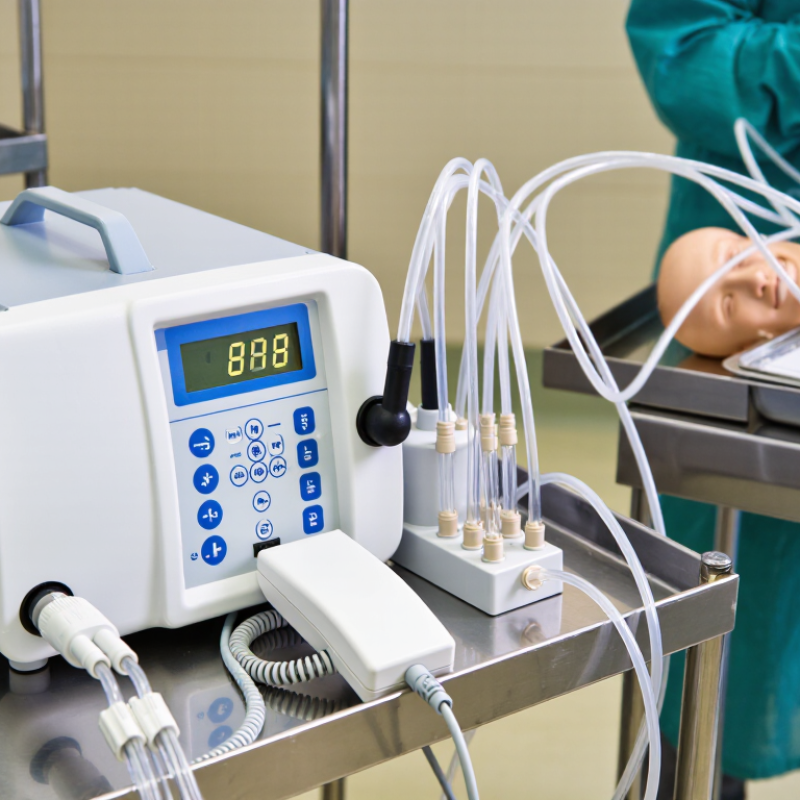
An arthroscopy pump balances pressure and flow to keep the joint expanded and the camera view clear. In knee procedures, steady inflow helps wash away blood and tissue debris. Published arthroscopy fluid-management reviews commonly describe working pressures around 40–60 mmHg, adjusted for the joint and procedure. This is a practical range, not a universal target. Too little pressure can cloud the view; excessive pressure may push fluid into surrounding tissues. That trade-off is easy to underestimate.
Pressure and flow are related, but they are not interchangeable. A pump may raise flow to restore visibility when instruments obstruct the outflow. Yet persistent high flow can increase fluid use and tissue swelling. Clinical literature on shoulder arthroscopy documents fluid extravasation as a meaningful concern, particularly during longer procedures and with elevated irrigation pressure. Teams should monitor the joint, nearby tissues, and fluid balance, rather than relying on the display alone. A clear screen is not the whole picture.
Tips: Begin with the lowest pressure that provides a stable view. Check tubing for kinks, confirm outflow is unobstructed, and reassess after changing settings. Record adjustments. Small details matter.
For global buyers, pump specifications matter more than headline flow rates. Compare the adjustable pressure range, displayed units, and accuracy at low settings. A practical selection check is whether the system can hold a steady working pressure around 40–60 mmHg while the surgeon changes instruments. This is a reference range, not a universal prescription; joint, procedure, and patient factors differ. Small differences matter.
Flow capacity should be tested with the intended tubing and cannula, not read from a brochure alone. Ask for flow-rate data under stated conditions, plus alarm response when inflow is blocked or outflow slows. AORN’s Guidelines for Perioperative Practice emphasize monitoring fluid management during endoscopic procedures. That makes clear displays, alarms, and recorded fluid use useful purchasing criteria. Numbers without test conditions are weak evidence.
Irrigation control should let staff adjust pressure and flow independently, when the system supports it, and react predictably to leakage or instrument exchange. Hynson and colleagues’ report in Anesthesia & Analgesia (1993) describes fluid extravasation risks during shoulder arthroscopy; higher pressure is not automatically better. Check how each candidate handles pressure recovery and fluid balance in simulated use. The comparison can feel tedious. It is worth doing. A specification sheet alone cannot reproduce a wet operating field.
Arthroscopy pump manufacturers differ less by headline pressure ranges than by how consistently they manage fluid during surgery. Their product lines may include inflow pumps, pressure sensors, disposable tubing, foot controls, and irrigation accessories. Useful features include adjustable flow, clear pressure displays, alarms, and quick setup.
Grand View Research’s Arthroscopy Devices Market Size, Share & Trends Analysis Report valued the broader global arthroscopy devices market at about USD 5.1 billion in 2022 and forecast 6.3% annual growth from 2023 to 2030. This is not a pump-only estimate, so buyers should avoid treating it as one.
For global reach, evaluate local technical support, staff training, spare-parts availability, and delivery reliability—not just a distributor map. Ask how pressure behaves when the joint’s fluid outflow changes. Specifications can look reassuring on paper; real-world performance still depends on setup, tubing, and clinical workflow.
That gap deserves attention.
For a global arthroscopy pump shortlist, verify the exact model and intended use—not just the manufacturer’s name. Search the FDA 510(k) database for the device’s clearance number, indications, and cleared configuration. FDA’s MDUFA V performance goals target 90% of 510(k) decisions within 90 FDA days; this is a review target, not proof of clinical superiority. A clearance may not cover every tubing set or accessory sold with a pump.
For EU buyers, check that the certificate covers the specific device and legal manufacturer under the EU MDR. Confirm the UDI, declaration of conformity, and certificate status. Then examine service coverage: local engineers, response times, loan units, spare-part availability, and training. Ask whether support continues after the warranty ends. A low purchase price can become expensive when a pump sits idle during surgery.
Tips: Request a written compatibility matrix for the pump, tubing, and fluid bags. Compare it with the instructions for use, then test the setup with your actual trays and workflow. Small connector details matter. I would still verify compatibility directly; a sales sheet may leave important exceptions unclear.
For global buyers, the quoted arthroscopy pump price is only the entry point. The WHO report Global Spending on Health: Coping with the Pandemic estimates worldwide health spending reached US$9.8 trillion in 2021, or 10.3% of global GDP. OECD’s Health at a Glance 2023 reports average health spending of 9.2% of GDP across OECD countries in 2022. These figures do not predict pump budgets, but they underline the pressure to justify equipment costs. Compare total cost of ownership over a consistent period, such as five years, and use the same estimated procedure volume for every supplier.
Request separate prices for the pump, tubing sets, fluid-management accessories, installation, and staff training. Then check service fees, warranty length, replacement-part availability, and typical repair response times. Small costs add up. A low purchase price may be offset by costly single-use supplies or limited local support. Ask suppliers to model annual consumable use and disclose what assumptions they used; case mix and surgeon preference can change actual usage. These estimates are not perfect, and that deserves attention. Before ranking manufacturers, compare the cost per procedure alongside uptime, training access, and support terms—not just the equipment quote.
|
This is a medical device. |