Top Insulin Syringe With Needle Suppliers Worldwide
Choosing a reliable Insulin Syringe With Needle supplier requires more than comparing prices or browsing attractive websites. Hospitals, pharmacies, distributors, and diabetes-care providers need consistent products, clear documentation, and dependable delivery. This guide examines leading suppliers worldwide through practical procurement criteria and professional quality considerations.
A trusted supplier should demonstrate manufacturing experience, stable production capacity, and strong quality-control procedures. Important details include sterile packaging, needle sharpness, barrel clarity, plunger movement, accurate measurement markings, and secure needle attachment. Small details matter. A poorly printed scale can create confusion during routine use. Damaged packaging can also raise serious sterility concerns. Suppliers should provide traceability records, product specifications, and appropriate quality certifications for their target markets. Compliance evidence matters more than promotional language.
Geography also influences supplier selection. Freight reliability, regional warehouses, communication speed, and after-sales support can affect long-term performance. Some manufacturers offer broad customization, while others focus on high-volume standard products. Both models have value, depending on purchasing needs. However, no supplier is perfect. A company with excellent pricing may have slower communication, while a premium manufacturer may require larger minimum orders. This guide therefore considers strengths, limitations, reputation, production transparency, and customer feedback. Public information can be incomplete, and supplier conditions may change over time. Buyers should verify current documents directly before making a final decision. Careful review protects users and supports more reliable healthcare supply chains.
Insulin Syringes With Needles: Types, Uses, and Key Features
Top Insulin Syringe With Needle Suppliers Worldwide
Insulin Syringes With Needles: Types, Uses, and Key Features
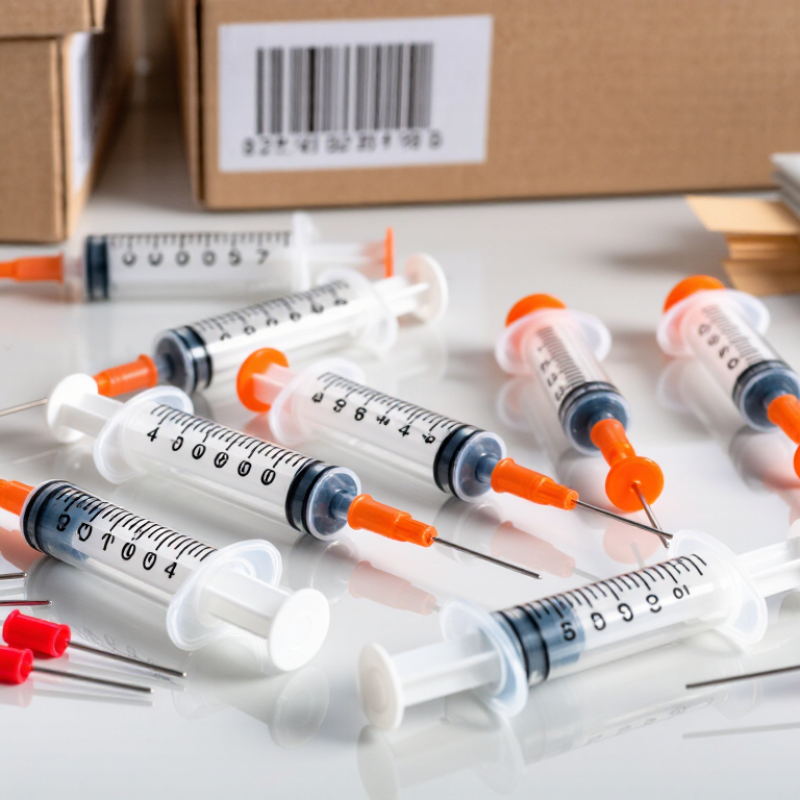
Insulin syringes with needles are designed for measured subcutaneous injections. Common capacities include 0.3, 0.5, and 1 mL. Smaller barrels can improve dose visibility. Clear markings matter during low-volume injections.
Needle length and gauge affect comfort and handling. Shorter needles are often selected for subcutaneous use, while finer gauges may reduce discomfort. Fixed-needle syringes can limit medication waste. Detachable versions may offer more flexibility, but they require careful compatibility checks. Insulin concentration also matters, such as U-100 or another prescribed strength. Never match a syringe by appearance alone.
Safety features deserve close inspection. Look for sterile, single-use packaging, readable graduations, smooth plungers, and secure needle caps. Some designs include shields that help reduce accidental needlestick injuries. A supplier should provide batch information, quality documentation, and storage guidance. These details support traceability and professional procurement.
A practical warning: the smallest syringe is not always the best choice. A large barrel may make a tiny dose harder to read. I have seen selection decisions focus too heavily on price, while needle comfort and measurement accuracy receive less attention. Healthcare professionals should confirm the syringe scale, needle size, insulin concentration, and injection technique before use. Used syringes require immediate placement in an approved sharps container. Availability differs across regions.
Top Insulin Syringe With Needle Suppliers Worldwide - Insulin Syringes With Needles: Types, Uses, and Key Features
| Syringe Type | Typical Capacity | Common Needle Gauge | Common Needle Length | Typical Use | Key Features | Important Selection Notes |
| U-100, 0.3 mL | 0.3 mL / 30 units | 28G–31G | 6–8 mm | Small insulin doses and dose-sensitive therapy | Fine unit graduations; low fill volume; easier dose measurement | Best when the prescribed dose is 30 units or less; confirm the scale is calibrated for U-100 insulin |
| U-100, 0.5 mL | 0.5 mL / 50 units | 28G–31G | 6–8 mm | Common daily insulin injections | Balance between capacity and dose visibility; widely available format | Suitable for doses up to 50 units; select half-unit markings when prescribed precision requires them |
| U-100, 1 mL | 1 mL / 100 units | 28G–31G | 8–12.7 mm | Larger prescribed doses or situations requiring extra capacity | High capacity; commonly marked in 1-unit increments | Avoid using a larger syringe solely for convenience when a smaller barrel would improve dose visibility |
| Short-needle insulin syringe | 0.3, 0.5, or 1 mL | 30G–31G | 4–6 mm | Subcutaneous injections for many adults and children | Designed for subcutaneous delivery; may reduce the need for skin-fold lifting in some users | Injection technique should follow professional guidance and the product instructions |
| Standard-length insulin syringe | 0.3, 0.5, or 1 mL | 28G–30G | 8–12.7 mm | Subcutaneous insulin delivery when a longer needle is prescribed | Available in multiple capacities and graduation formats | Longer needles require appropriate injection technique to help avoid unintended intramuscular delivery |
| Fixed-needle syringe | Usually 0.3, 0.5, or 1 mL | 28G–31G | 4–12.7 mm | Routine single-patient insulin administration | Needle is permanently attached; generally minimizes residual medication space | Cannot be separated for reuse; dispose of the complete unit in an approved sharps container |
| Low-dead-space syringe | Commonly 0.3, 0.5, or 1 mL | 28G–31G | 4–8 mm | Dose-sensitive applications where minimizing residual volume is valuable | Reduced space between the plunger and needle hub; may reduce medication waste | Dead-space design can vary; compare technical specifications rather than relying only on the product name |
| Safety insulin syringe | 0.3, 0.5, or 1 mL | 28G–31G | 4–12.7 mm | Healthcare settings with increased needlestick-risk controls | May include a hinged shield, sliding shield, or automatic safety mechanism | Confirm activation method, compatibility with the intended procedure, and applicable regulatory requirements |
| U-40 insulin syringe | Typically 0.3, 0.5, or 1 mL | 28G–31G | 6–12.7 mm | Specific insulin formulations labeled U-40, commonly in veterinary use | Graduated for 40 units per milliliter rather than 100 units per milliliter | Never interchange U-40 and U-100 syringes without qualified medical direction because dose errors can occur |
| Single-use sterile syringe | 0.3, 0.5, or 1 mL | 28G–31G | 4–12.7 mm | One injection by one patient or under a controlled clinical procedure | Sterile packaging, clear barrel, readable graduations, and a protective needle cap | Check package integrity and expiration date; do not reuse or share insulin syringes |
Note: Dimensions and configurations are typical industry ranges. Always verify the insulin concentration, prescribed dose, needle length, sterility status, and local medical-device requirements before use.
How to Evaluate Global Insulin Syringe Suppliers
Evaluating global insulin syringe suppliers starts with evidence, not attractive catalogs. The IDF Diabetes Atlas, 10th edition, estimated 537 million adults had diabetes in 2021. It projects 783 million by 2045. These figures indicate sustained demand, but they do not prove reliable supply. Ask for monthly capacity, needle options, sterility controls, and lead-time records. Can one shipment arrive with intact seals and readable graduations?
Quality review should follow recognized requirements. ISO 7886-1 covers sterile, single-use hypodermic syringes. ISO 9626 addresses stainless-steel needle tubing. Request current certificates, scope pages, batch-release samples, and independent test reports. Check whether documents match the exact barrel size and needle configuration. One certificate cannot validate every model. That mistake is common.
Traceability deserves equal weight. WHO guidance on good manufacturing practices emphasizes validated processes, documentation, and contamination control. Ask for a sample lot code, retention policy, deviation record, and complaint-response time. Compare landed cost, not factory price. Include freight, inspection, rejected units, and emergency replenishment. A supplier may quote confidently yet provide weak data. I would not ignore that discomfort. Visit the facility when volumes justify it, and interview the quality manager without sales staff present. Honest evaluation sometimes means delaying approval.
Leading Supplier Regions and Manufacturing Capabilities
Top Insulin Syringe With Needle Suppliers Worldwide
Leading supplier regions combine established medical manufacturing with specialized sterile-device production. East Asia offers high-volume automation, precise molding, and competitive production costs. European facilities often emphasize process validation, cleanroom control, and detailed traceability. North American suppliers commonly provide strong quality systems, clinical documentation, and responsive technical support. South Asian manufacturers are expanding capacity, especially for disposable syringes and export packaging.
Reliable suppliers should show more than attractive catalogs. Their factories need controlled environments, calibrated inspection tools, and documented needle assembly procedures. Important capabilities include low-dead-space designs, consistent barrel graduations, smooth plunger movement, and secure needle attachment. Sterilization records should identify the method, batch number, and release criteria. Independent testing can verify sterility, leakage resistance, packaging integrity, and needle sharpness.
Regional strengths are useful, but they do not guarantee consistent performance.
No manufacturing region is perfect. A supplier may have modern equipment yet weak change-control practices. Another may offer excellent pricing but limited capacity during demand spikes. I would review recent audit findings, production samples, complaint records, and shipment history before approving a source. Factory visits can reveal practical details, such as crowded staging areas or unclear material labels. These observations matter. Specifications on paper sometimes look stronger than daily operations.
Quality, Safety, Compliance, and Product Certification
Top Insulin Syringe With Needle Suppliers Worldwide
Reliable suppliers treat quality as a daily process, not a certificate on a website. During product evaluations, inspect barrel clarity, plunger movement, needle sharpness, and hub security. A smooth plunger should move evenly without sudden resistance. The printed scale must remain clear after handling. These details matter during routine clinical use.
Safety depends on controlled materials, clean manufacturing areas, and secure packaging. Suppliers should provide lot numbers, expiration dates, sterilization records, and traceability documents. Relevant certifications may include ISO 13485, ISO 7886, ISO 7864, and applicable market approvals. Certification alone is not enough. Buyers should verify its scope, validity, and connection to the exact product. I have seen documents look complete while missing important model details.
Tips: Request samples from different production lots. Check seal integrity, needle alignment, and labeling accuracy. Ask for independent test reports when available. Confirm that packaging survives normal transport without crushing or moisture damage. Keep an audit trail for every purchase decision. Small checks prevent expensive problems.
A dependable supplier also explains complaint handling and corrective actions clearly. Response time, technical records, and staff training reveal operational maturity. Some suppliers may offer attractive pricing but weak documentation. That trade-off deserves careful reflection. No supplier is perfect, and periodic reassessment remains necessary.
Purchasing Factors for Healthcare Providers and Distributors
Top Insulin Syringe With Needle Suppliers Worldwide
Healthcare providers and distributors should assess more than price when selecting insulin syringe suppliers. Product consistency matters at every delivery. Check the syringe capacity, needle gauge, length, dead-space design, and graduation clarity. These details affect accurate dosing and daily handling. Confirm sterile packaging, batch identification, expiry dates, and documented quality controls. Suppliers should also provide clear technical files and responsive complaint procedures.
Supply reliability deserves equal attention. Review production capacity, minimum order quantities, lead times, and emergency replenishment options. A low quotation may look attractive. It may not remain economical after freight, damaged cartons, or delayed deliveries. Ask for samples and inspect the plunger movement, needle attachment, packaging seals, and printed markings. Distribution teams should also examine carton strength and storage requirements. Humidity, heat, and poor warehouse rotation can reduce product usability.
Tips: Request recent quality documents and batch records. Compare samples from different lots, not only one box. Keep a written supplier scorecard covering quality, service, delivery, and responsiveness. Do not ignore small defects. A slightly unclear graduation may become a serious training concern. Procurement decisions should also reflect local clinical practices and applicable medical-device requirements. Regular supplier reviews are useful, but they are sometimes skipped when deliveries appear smooth. That assumption deserves reconsideration.
Top Insulin Syringe With Needle Suppliers Worldwide — Purchasing Factors for Healthcare Providers and Distributors
Common insulin syringe capacities are a key purchasing factor. For U-100 insulin, one milliliter contains 100 insulin units, so the maximum dose capacity increases directly with barrel size.
Reference basis: U-100 insulin concentration equals 100 units per milliliter. Common syringe capacities shown are 0.3 mL, 0.5 mL, and 1 mL, corresponding to maximum capacities of 30, 50, and 100 units.