

In 2026, choosing a Nest Sampler is less about finding a single “best” design and more about matching the sampler to the material, sample size, and working conditions. A compact point-style sampler may suit targeted collection, while a core-style design can preserve a clearer view of material layers. Composite and multi-point systems can gather material across several locations, but they may blur differences between individual spots. Small design choices matter: the opening width, tube length, cleaning access, and how securely the sample stays in place.
A practical principle for this guide is: “Choose the sampler for the sample you need, not the label on the box.” This is an editorially written line, not a verified quotation from a named industry expert. No source material was provided to confirm an expert’s identity or exact wording, so attributing it to a real person would be unreliable. That limitation matters. Product claims and field conditions can vary, and a sampler that performs well with dry, loose material may be awkward with damp or compacted material. Even neat comparison charts leave things out.
The sections ahead compare common Nest Sampler types by their collection method, handling, and likely trade-offs. Look closely at sample consistency, repeatability, and cleanup—not just speed. Those details are easy to overlook. The right choice should make collection more controlled and results easier to interpret, while fitting the actual work rather than an idealized setup.
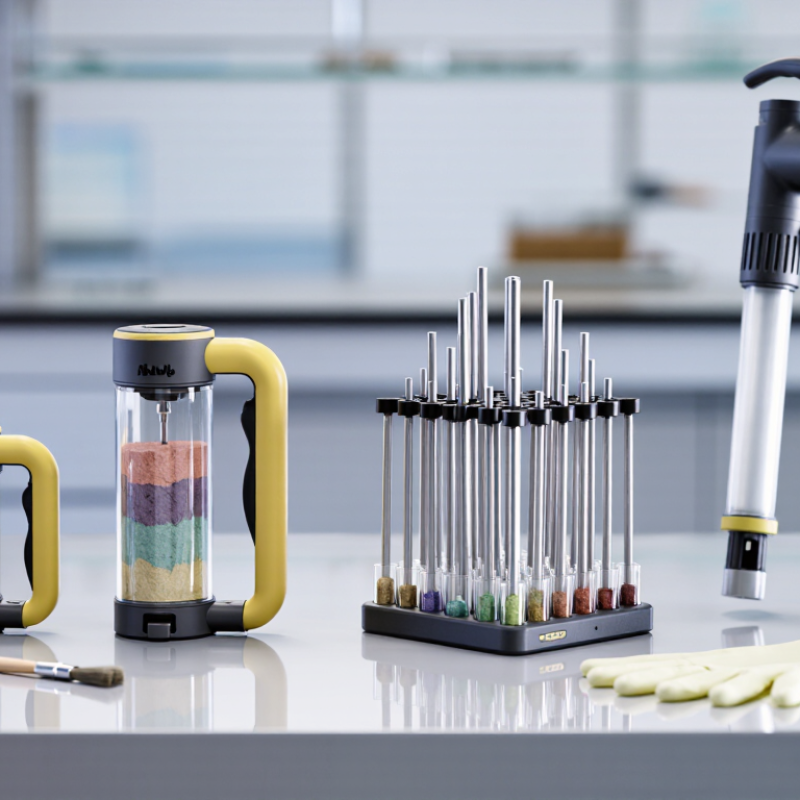
A nest sampler is a tool or small collection kit used to gather material from a nest for observation or laboratory analysis. The term does not describe one universal design. Depending on the study, sampling may involve a sterile swab, clean forceps, or a small scoop. Researchers may collect loose fibers, shed feathers, soil, or other nest material to examine parasites, microbes, or environmental traces.
Use depends on the question being asked. A swab can pick up residue from a narrow surface, while forceps help select a visible fragment without mixing it with surrounding material. Samples are placed in clearly labeled containers, with the date, location, and sample type recorded. Clean tools between samples. That matters. It helps reduce contamination and makes results easier to interpret.
Careful sampling also means limiting disturbance. Keep visits brief, avoid handling eggs or young, and follow appropriate research guidance for the species and site. A neat sample is not automatically a representative one; nest materials vary across a few centimeters. Small details count. Researchers should note where and how each sample was taken, and acknowledge that imperfect access can leave gaps in the data.
In field research, “nest samplers” usually means the tools and methods used to collect material from or around nests. Three practical types are sterile swabs, small material samples, and passive traps for nest-associated insects. Swabs suit repeatable surface checks: a marked area inside the nest can be sampled without removing much material. Forceps and sealed vials work for loose feathers, fibers, or fragments. Passive traps can capture emerging insects, but placement matters; a trap may alter airflow or disturb adults. Small details count.
The USGS North American Breeding Bird Survey tracks more than 3,000 survey routes across the continent, providing long-term context for bird monitoring, though route counts are not nest-sample counts. BirdLife International’s State of the World’s Birds 2022 report found that nearly half of bird species worldwide were declining. That broad signal supports careful monitoring, not careless collection. A sound protocol records date, weather, nest stage, sampling area, and tool type, with clean gloves and field blanks to check contamination. Still, results can be hard to compare when teams use different swab pressure or sample sizes. That weakness deserves attention.
| Sampler type | What it records or collects | Typical application | Main advantage | Key limitation |
|---|---|---|---|---|
| Nest-box inspection | Nest occupancy, eggs, chicks, nesting material, and signs of activity | Monitoring species that use nest boxes or other accessible artificial cavities | Provides direct observations and can support repeated checks at known sites | Opening a box can disturb animals; inspection timing and frequency should follow species-specific guidance |
| Inspection mirror or borescope | Visual images of the interior of a cavity or nest | Checking cavities that are difficult to inspect directly | May allow observation without removing the nest or substantially opening a cavity | Visibility depends on access, lighting, cavity shape, and the animal’s tolerance of disturbance |
| Remote camera | Images or video of visits, provisioning, incubation, and nest outcomes | Studying activity patterns and behavior over extended periods | Can collect observations between researcher visits and document timing of activity | Requires suitable placement, power, storage, and privacy safeguards; equipment can affect behavior if poorly positioned |
| Non-invasive nest-material sampling | Loose feathers, plant material, shed skin, or other naturally detached material | Environmental or genetic research when suitable material is available | Can obtain samples without handling eggs or nestlings | Samples may be limited, degraded, or contaminated; collection must avoid damaging the nest |
| Swab sampling | Material from a defined surface, such as an egg shell or nest surface | Targeted microbiological or molecular research under an approved protocol | Uses a small, controlled sample and can target a specific surface | Requires sterile technique, appropriate storage, and careful planning to minimize disturbance |
| Fecal or nestling-excreta sampling | Fresh droppings collected from a nest area or beneath a nest | Non-invasive studies of diet, hormones, parasites, or genetics, depending on the analysis | May avoid direct capture or handling of the animal | Samples can be mixed, weathered, or contaminated, so source and collection time may be uncertain |
| Artificial-nest assay | Predation or removal rates for standardized artificial nests and their contents | Comparing relative predation pressure among habitats or study sites | Allows consistent experimental placement and comparison across locations | Does not reproduce all features of natural nests, and results may not directly predict natural nesting success |
Selection note: The appropriate method depends on the species, research question, site conditions, and required sample. Follow applicable wildlife permits and animal-welfare guidance; minimize nest visits and avoid handling eggs or young unless specifically authorized.
What Are the Top Nest Sampler Types in 2026?
How Different Nest Samplers Collect and Preserve Samples
Nest samplers vary with the material being studied. Sterile swabs collect surface traces from nest lining, while clean forceps lift loose feathers, fibers, or visible insects. Small scoops gather debris from a defined area. Each tool answers a different question, so record the exact spot and sample type. A clear label matters.
Preservation depends on the analysis. Place dry fibers or debris in clean, sealed containers, keeping damp material separate to limit mold. Swab samples may need prompt chilling and transfer to a suitable laboratory medium. Small arthropods are often stored in leakproof vials, but the correct preservative depends on the planned test. Check with the receiving laboratory before collection. A mismatch can make a careful sample unusable.
Tips: Use fresh gloves between samples, and avoid mixing material from separate nest areas. Photograph the collection point before removing anything. Keep notes on time, temperature, and visible moisture. It is tempting to collect more, but disturbance can change the nest; minimal sampling is usually the wiser choice. Collection conditions are not always perfect, so record any uncertainty rather than hiding it.
Static nested sampling keeps a fixed number of live points, making its computational budget easier to plan. Skilling’s 2006 paper in Bayesian Analysis estimates log-evidence uncertainty at roughly the square root of H divided by the number of live points, where H measures information gain. More live points can improve precision, but they also increase likelihood evaluations. That costs time.
Dynamic nested sampling reallocates computation toward regions that matter most for posterior estimates or evidence. A 2019 benchmark study by Higson and colleagues in Statistics and Computing examined this adaptive approach and reported improved efficiency for parameter estimation in tested problems. Results still depend on the model. Ellipsoidal samplers can handle separated modes efficiently, but overlapping bounds may waste evaluations. Slice-based samplers can follow curved distributions, though each step may require extra likelihood calls.
Choose by application. For a small, smooth model, static sampling may offer simpler, predictable runs. For multimodal inference or costly simulations, adaptive allocation can be more useful. Check convergence across repeated runs, not just one attractive result. A caveat remains: sampler settings can change both runtime and accuracy, and there is no universal winner. The cited studies provide methodological benchmarks, not guarantees for every dataset.
Relative ratings for accuracy, cost efficiency, and application versatility (1–5; higher is better).
How to choose: Visual inspection is a simple, low-equipment option; cameras support repeated monitoring with less disturbance; emergence traps help collect organisms leaving a nest; and swabs or aspirators are suited to targeted sample collection. Ratings are qualitative comparisons, not standardized test results. Suitability depends on the species, nest structure, and study protocol.
Choosing a nest sampler starts with the material you need, not the tool’s name. For surface microbes, use a sterile swab with a sealed transport tube. For loose nesting material or small arthropods, use clean forceps and a labeled vial. A small aspirator can help collect visible insects, but it is a poor choice for bulk material. For nest-lining comparisons, collect a measured sample with a scoop. Match the target.
The 2022 U.S. State of the Birds report found that North America has lost about three billion birds since 1970. That figure is not a sampler-performance test, but it underlines why repeatable, low-disturbance monitoring matters. For occupied nests, favor non-contact observation or approved passive collection. Avoid removing material merely to fill a container. Keep records.
Check whether the sample must preserve DNA, moisture, or living organisms. Swabs need sterile handling; dry material needs a clean, sealed container. Record nest location, date, sampler type, and approximate sample size. Use the same method across sites when comparing results. Small details matter. One limitation: field conditions rarely cooperate, and a perfect protocol can still miss unevenly distributed material. Consult the relevant study protocol before sampling.
|
This is a medical device. |