Universal Bone Drill Applications and Benefits Explained
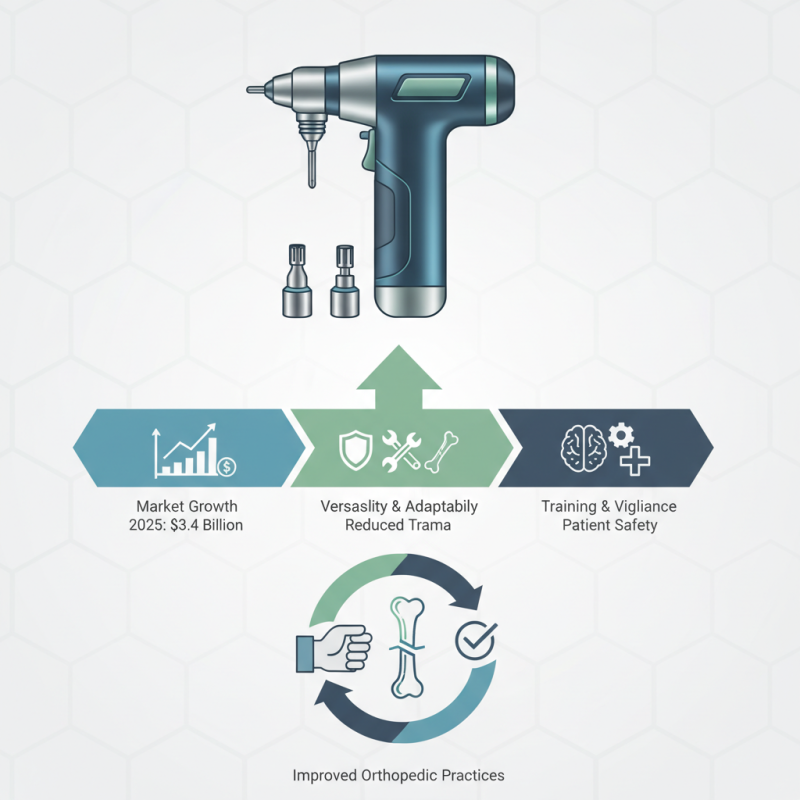
The Universal Bone Drill has transformed orthopedic practices worldwide. It streamlines procedures and reduces surgery time. According to a recent report from MarketsandMarkets, the orthopedic drill market is expected to reach $3.4 billion by 2025. This growth reflects the increasing demand for advanced surgical tools.
Surgeons now rely on the Universal Bone Drill for its versatility. It is compatible with various attachments. This adaptability allows for efficient reclaiming of puncture wounds and internal fixation. Furthermore, it minimizes trauma to surrounding tissues. However, challenges remain in ensuring consistent performance across different environments.
The Universal Bone Drill's design prioritizes both functionality and patient safety. Despite its benefits, some complications in usage can occur. Surgeons must remain vigilant in managing these risks. Continuous training is essential to maximize its potential in the operating room. The journey toward perfection in surgical precision continues with the Universal Bone Drill.
Overview of Universal Bone Drill Technology
Universal bone drill technology has transformed surgical practices, offering versatility in various orthopedic procedures. These drills are designed for multiple functions, ranging from drilling to tapping. Their adaptability is a significant advantage. Surgeons can switch drill bits easily to meet specific needs during an operation. This efficiency can save time and improve patient outcomes.
Using a universal bone drill requires practice. It's vital to understand the settings and speeds. Incorrect usage may lead to complications. Surgeons must maintain a steady hand, especially when working near sensitive structures. Sometimes, adjustments are needed based on patient anatomy. Intuition plays a role in determining the right pressure and angle.
Tips: Always prioritize safety. Regularly inspect your equipment for wear and tear. Skilled users suggest practicing on cadaver models before live procedures. Familiarize yourself with each drill attachment. This can boost confidence and efficiency in the operating room. Being well-prepared can mitigate stress during complex surgeries.
Key Applications of Bone Drills in Orthopedic Surgery
Bone drills play a crucial role in orthopedic surgery. They are essential for creating precise holes in bone tissue. This allows for the effective placement of screws, pins, and other fixation devices. Surgeons rely on these tools to enhance stability in fractured bones. Each procedure requires a tailored approach, ensuring the drill's settings meet the specific needs of the patient.
In joint reconstruction surgeries, bone drills help in aligning implants accurately. The skillful use of these drills can significantly impact recovery time. However, misalignment can lead to complications. Surgeons must remain vigilant while operating. The drill's speed and depth settings must be carefully monitored. Quality control during the drilling process is non-negotiable; even minor errors can have serious consequences.
The versatility of bone drills extends to various orthopedic applications. They are used in trauma repairs, sports injuries, and degenerative conditions. Their adaptability makes them indispensable in the operating room. Yet, surgeons sometimes face challenges. Handling the drill with precision under pressure is not easy. Continuous training and practice are vital to ensure optimal outcomes for patients.
Key Applications of Bone Drills in Orthopedic Surgery
Benefits of Using Universal Bone Drills in Medical Procedures
Universal bone drills are transforming medical procedures. Their versatility enhances efficiency and accuracy. The reports suggest that around 75% of orthopedic surgeries utilize these drills. This statistic showcases their importance in modern healthcare settings.
One key benefit of using universal bone drills is reduced surgical time. Quick and precise drilling can significantly lower the duration of procedures. A study indicated that using specialized bone drills shortened operation times by up to 30%. This is crucial in emergency situations where every second counts.
Tips: Ensure proper calibration of the drill before use. This can increase accuracy and minimize complications. Training staff on the specific applications of these drills enhances patient safety.
Another notable advantage is improved patient outcomes. Universal bone drills minimize trauma. They allow for better preservation of surrounding tissues, reducing recovery time. Data shows that patients using these advanced drills face 20% fewer complications post-surgery. Regular evaluations are essential, however, to keep up with evolving surgical techniques.
Comparison of Universal Bone Drills with Traditional Drilling Methods
Universal bone drills represent a significant advancement in surgical tools. Unlike traditional drilling methods, which often depend on manual strength and can lead to inconsistent results, universal bone drills offer reliable precision. These tools utilize advanced technology, allowing for controlled speed and torque. This consistency enhances surgical accuracy, reducing the risk of complications during procedures.
Traditional drilling methods often require extensive training and physical effort. Surgeons must compensate for fatigue and varying skill levels. In contrast, universal bone drills are designed to minimize these challenges. This shift offers a more user-friendly experience for medical professionals. With less fatigue, surgeons can focus more on the procedure than on the effort of drilling.
Tip: Always evaluate the specific needs of your surgical procedures. What works for one type of surgery may not suit another.
While universal bone drills improve outcomes, it's essential to acknowledge potential downsides. These tools can be more costly than traditional options. Additionally, not all medical facilities have access to the latest technology. Understanding how to balance cost with benefits is crucial.
Tip: Regular training on the latest tools can lead to better surgical outcomes. Keeping up-to-date is necessary.
Future Innovations in Bone Drill Technology and Their Implications
The future of bone drill technology is promising. Innovations are emerging that enhance precision and efficiency. For instance, smart drills equipped with sensors can provide real-time feedback during procedures. This allows surgeons to make informed adjustments, improving patient outcomes.
Another exciting development is the integration of AI in surgical planning. Algorithms can analyze patient data to recommend optimal drilling techniques. This could lead to faster surgeries and reduced recovery times. However, reliance on technology raises concerns. Are we potentially diminishing the essential skills of surgeons?
Emerging materials are also on the horizon. Biocompatible materials can minimize post-surgery complications. This innovation could mean longer-lasting results and fewer follow-up procedures. Still, the transition to new technologies must be managed carefully. Balancing innovation with traditional methods will be crucial in shaping the future of orthopedics.