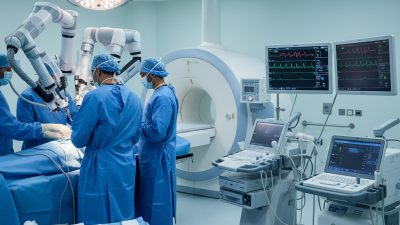

Choosing the world’s 10 best 1st class medical suppliers requires more than comparing product catalogs or brand recognition. Hospitals need dependable devices, documented quality systems, responsive support, and transparent regulatory records. The stakes are tangible: a delayed infusion pump can interrupt treatment, while a poorly supported diagnostic device can slow clinical decisions.
Industry demand continues to expand. Fortune Business Insights estimates that the global medical devices market reached approximately USD 512 billion in 2022 and may exceed USD 799 billion by 2030. The World Health Organization also reports that more than 2.5 billion people need assistive products, with demand expected to rise significantly by 2050. These figures show why supplier selection affects both advanced hospitals and resource-limited clinics.
This guide examines manufacturers and distributors through practical criteria. These include ISO 13485 certification, product registration, clinical evidence, cybersecurity controls, recall transparency, delivery performance, and after-sales training. FDA databases, European regulatory guidance, WHO publications, and audited company reports provide useful reference points. Still, no ranking is universally perfect. A supplier serving cardiac-care centers may not suit a rural primary-care network. Prices, local approvals, shipping conditions, and technician availability can change the result.
Experience matters here. A polished website cannot replace traceable batch records or a working service hotline. Some suppliers also disclose less information than buyers expect. That deserves scrutiny. The following selection therefore emphasizes verifiable capabilities, not marketing claims, while recognizing that “best” remains partly dependent on clinical context.

First-class medical suppliers are not simply low-cost distributors with attractive catalogs. The term describes suppliers that consistently deliver safe, compliant, traceable, and clinically appropriate products. Their scope can include devices, diagnostic equipment, sterile consumables, maintenance, training, and post-market support.
The World Health Organization reports more than two million medical device types, grouped into over 7,000 categories. This complexity makes technical knowledge essential. A reliable supplier should maintain documented quality systems, verified manufacturing controls, clear batch records, and responsive complaint handling. Certificates alone are not enough.
Procurement teams should examine regulatory registration, risk management, delivery continuity, cybersecurity, and field-service capability. The WHO states that one in ten patients experiences harm in healthcare, while more than half of harmful events may be preventable. Supplier quality therefore affects real clinical outcomes, not only purchasing scores.
OECD health-system data also shows persistent pressure on healthcare budgets, staffing, and supply resilience. A first-class partner must control cost without weakening safety or support. That balance is difficult. An audited supplier can still fail during a shortage or communicate poorly after delivery. Buyers should test response times, inspect traceability records, review recall procedures, and request evidence from comparable clinical settings.
The definition remains practical, not glamorous. Reliability appears under pressure.

Choosing a first-class medical supplier requires more than comparing prices or polished websites. The WHO estimates that one in ten medical products in low- and middle-income markets may be substandard or falsified. This makes traceability essential. Buyers should request batch records, recall procedures, supplier audits, and documented corrective actions. A valid ISO 13485 certificate helps, but it is not proof of daily discipline.
Quality systems deserve close inspection. Ask how the supplier validates sterilization, monitors temperature, and controls outsourced production. For medicines and temperature-sensitive devices, review delivery records, alarm logs, and contingency plans. The IQVIA Institute’s 2024 Global Use of Medicines report projects global medicine spending to reach approximately 2.3 trillion dollars by 2028. Rising demand can pressure capacity, so production redundancy matters. Can the supplier maintain service during a port closure or raw-material shortage?
Regulatory knowledge should match the destination market. Check product registration, labeling controls, post-market surveillance, and data protection practices. Financial stability also matters, especially for long-term contracts. A low quote may conceal fragile logistics. No scorecard is perfect. Certificates can become paperwork. Reference checks, sample inspections, and a small pilot order reveal more than promises. I would also record response times during a simulated complaint; slow communication is a warning sign. Suppliers should explain limits honestly, because overconfidence often appears before quality failures.
Comparative benchmark based on internationally recognized medical-supply evaluation criteria
| Rank | Anonymous Supplier Profile | Primary Capability | Quality-System Evidence | Regulatory Coverage | Traceability Standard | Cold-Chain Capability | Typical Lead Time | International Reach | Key Evaluation Advantage |
|---|---|---|---|---|---|---|---|---|---|
| 1 | Profile A — Global Integrated Distributor | Broad medical portfolio | ISO 13485-aligned supplier controls | Multi-market registration support | Lot and serial-level records | Validated refrigerated lanes | 2–6 weeks | Multi-region | Strong balance of product range, compliance support, and logistics scale. |
| 2 | Profile B — Advanced Diagnostics Specialist | Diagnostic instruments and consumables | Documented design and process controls | IVD-focused market documentation | Reagent lot tracking | 2–8 °C monitoring available | 3–8 weeks | Regional to global | Best suited to laboratories requiring technical support and consistent reagent supply. |
| 3 | Profile C — Surgical and Operating-Room Supplier | Surgical instruments and procedure kits | Sterilization and inspection records | Device-class documentation | UDI or equivalent product identification | Usually not required | 2–5 weeks | Multi-region | Prioritizes sterility assurance, procedure consistency, and instrument availability. |
| 4 | Profile D — Pharmaceutical and Injectable Distributor | Medicines and injectable products | Good Distribution Practice controls | Pharmaceutical licensing support | Batch, expiry, and recall records | Validated 2–8 °C transport | 1–4 weeks | Regional to global | Suitable for buyers that require controlled storage, expiry management, and recall readiness. |
| 5 | Profile E — Hospital Equipment and Capital-Project Provider | Clinical equipment and installation | Installation qualification records | Local import and commissioning support | Asset serial-number management | Equipment-dependent | 8–24 weeks | Multi-region | Adds value through site planning, training, commissioning, and after-sales service. |
| 6 | Profile F — Infection-Prevention Supplier | PPE, disinfectants, and sterilization supplies | Batch testing and conformity records | PPE and chemical-use documentation | Batch and expiry tracking | Generally ambient controlled | 1–4 weeks | Global availability varies | Performs well where demand volatility, stock rotation, and infection-control compliance matter. |
| 7 | Profile G — Laboratory Automation Partner | Automation platforms and workflow systems | Software validation and service records | Instrument and software compliance files | Sample and instrument audit trails | Consumable-dependent | 10–26 weeks | Multi-region service network | Strong choice for throughput, interoperability, uptime, and documented technical support. |
| 8 | Profile H — Homecare and Patient-Monitoring Supplier | Portable monitoring and homecare devices | Electrical safety and performance testing | Home-use labeling and support | Device serial tracking | Normally not required | 2–8 weeks | Regional to global | Emphasizes usability, patient support, calibration, and replacement availability. |
| 9 | Profile I — Emergency and Public-Health Stockpile Supplier | High-volume essential supplies | Prequalification and inspection evidence | Tender and humanitarian procurement support | Container, lot, and shipment records | Product-dependent | 1–8 weeks | Global project-based | Designed for surge capacity, contingency planning, and large institutional orders. |
| 10 | Profile J — Specialty and Custom-Configured Supplier | Specialty devices and custom kits | Configuration and change-control records | Product-specific regulatory pathway | Configuration and serial-level tracking | Product-dependent | 6–16 weeks | Selective global coverage | Provides flexibility when standard catalog products cannot meet clinical or technical requirements. |
The ten leading medical suppliers worldwide are not judged by size alone. They support hospitals with reliable devices, diagnostics, consumables, and maintenance.
The World Health Organization reports over two million medical device types across more than 7,000 generic groups. That scale makes supplier comparison difficult.
A strong shortlist should include suppliers with verified manufacturing controls, regional warehouses, and clear product traceability. Buyers should examine sterile packaging, lot numbers, calibration records, and replacement-part availability.
The WHO Global Health Expenditure Database recorded worldwide health spending of about US$9.8 trillion in 2021.
Procurement decisions now affect budgets, patient safety, and service continuity.
Supplier experience matters during shortages. So does local technical support. A low price can hide costly delays. That is worth questioning.
Tips:
Request three recent quality certificates. Check delivery performance by region. Confirm cold-chain monitoring for temperature-sensitive products.
Ask for training records and complaint-response times. ISO 13485 certification helps, but it does not guarantee perfect performance.
Review audit findings when possible. Also, compare total ownership costs, not only purchase prices.
No ranking is perfect. Market conditions change quickly, and published data may lag real hospital experience. Teams should document their assumptions before selecting among ten global suppliers.
Choosing the ten best first-class medical suppliers requires more than comparing product catalogs. Strong suppliers offer surgical instruments, patient monitors, diagnostic equipment, wound-care products, and hospital furniture. Product quality should be supported by clear specifications, batch records, and traceable quality controls. User manuals should be available in the destination country’s language. Small details matter, such as readable labels and secure packaging.
Certifications deserve careful checking. ISO 13485 indicates a medical-device quality management system, but it does not prove every product is suitable for every market. Depending on the destination, buyers may need CE marking, FDA authorization, UKCA marking, or other national registrations. Certificates should match the exact model, manufacturer, and intended use. Check the issuing body and expiration date. A polished certificate list can still hide weak documentation.
International service coverage often separates reliable suppliers from ordinary exporters. Look for regional service engineers, local distributors, spare-parts access, remote troubleshooting, and documented response times. Training should include installation, cleaning, calibration, and safe operation. Multilingual technical support also reduces avoidable mistakes. Ask how urgent repairs are handled across different time zones. Response speed matters.
I have seen buyers focus heavily on purchase price and overlook maintenance costs. That approach can fail. Warranty terms, replacement cycles, software updates, and calibration schedules should be reviewed before signing. No supplier performs perfectly in every region. A realistic evaluation leaves room for delays, customs issues, and uneven local support. Supplier references from hospitals or licensed distributors can reveal what brochures omit.
International service coverage is assessed against the number of countries in each United Nations geographic region. This reference helps evaluate whether a medical supplier has the logistics, regulatory, and after-sales capability required for worldwide distribution.
The chart represents 195 countries grouped by broad UN geographic regions: Africa 54, the Americas 35, Asia 48, Europe 44, and Oceania 14. First-class suppliers commonly support product categories such as diagnostic equipment, surgical instruments, monitoring systems, patient-care equipment, and medical consumables. Typical quality and regulatory references include ISO 13485, ISO 14971, IEC 60601-1, the EU Medical Device Regulation, and applicable United States FDA requirements.
Choosing a first-class medical supplier requires more than comparing prices. Check valid regulatory registrations, quality certifications, product traceability, and documented complaint procedures. A dependable supplier should provide batch numbers, expiration dates, storage instructions, and clear shipping records. Ask whether its quality system follows recognized medical-device standards, such as ISO 13485, where appropriate. Request recent audit summaries and evidence of corrective actions. Reliable suppliers should answer specific questions without hiding behind polished marketing language.
Examine delivery performance under real conditions. Can the supplier maintain temperature control during a delayed flight? Does it offer tamper-evident packaging and shipment alerts? Ask for average lead times, emergency stock policies, and replacement procedures for damaged goods. A practical trial order can reveal more than a sales presentation. Inspect the carton, labeling, packing slip, and response time. Small details matter.
Look beyond the initial quotation. Calculate freight, storage, training, maintenance, and disposal costs. Confirm that technical support is available in your working hours and language. Speak with hospitals or distributors that have used the supplier for several years. Their experience may expose delays that references carefully avoid. No checklist is perfect. A supplier may meet every formal requirement yet communicate poorly during a shortage. Leave room for reassessment, especially after the first three deliveries. Document every concern, including minor ones, before expanding the relationship.
|
This is a medical device. |