
China Top Lower Leg Brace Suppliers?

China’s lower leg brace suppliers serve hospitals, rehabilitation clinics, and distributors seeking dependable orthotic products. Yet “top” should mean more than low prices or polished catalogs. Buyers need to assess fit, material quality, sizing options, production consistency, and communication after delivery. A brace may look sturdy on a sample table, but comfort and skin contact matter during daily use.

The World Health Organization and UNICEF’s 2022 Global Report on Assistive Technology estimates that more than 2.5 billion people need one or more assistive products. That figure could reach 3.5 billion by 2050. These are broad assistive-technology estimates, not lower-leg-brace sales figures. The distinction matters. WHO Director-General Dr. Tedros Adhanom Ghebreyesus described assistive technology as “a game changer for people with disabilities, older people and people with chronic diseases.” His words highlight why product selection deserves care, even though they do not assess individual brace suppliers.

This guide examines China-based manufacturers through practical questions: Can they document specifications? Do they explain customization limits? Are samples consistent with production orders? Supplier rankings rarely capture every clinic’s needs. A lightweight design may suit one user and fail another. That is worth remembering. The pages ahead compare supplier capabilities and identify details buyers should verify before making contact.
China Top Lower Leg Brace Suppliers?

Lower-Leg Brace Types and Uses: AFOs, CAM Boots, and Functional Supports

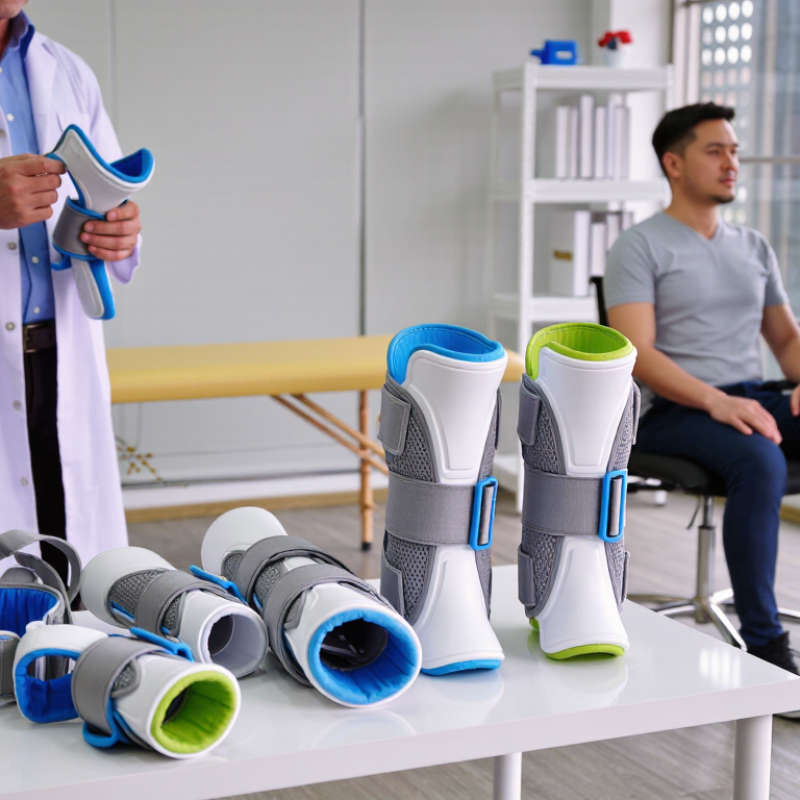
Lower-leg braces serve different jobs, so selection should follow the injury, walking pattern, and clinician’s assessment. An ankle-foot orthosis (AFO) supports the ankle and foot, often helping manage foot drop or ankle instability. A CAM boot immobilizes the lower leg and foot after certain fractures or soft-tissue injuries. Functional supports are lighter and allow more movement; they may suit mild instability during daily activity. They are not interchangeable.

The World Health Organization reports that falls cause about 684,000 deaths worldwide each year, while 37.3 million falls require medical attention. That figure highlights the importance of stability, but it does not mean every person needs a brace. Fit, swelling, skin condition, and walking goals matter. A boot that feels secure in the clinic may rub against the ankle after an hour at home. Small detail. Reassessment is easy to overlook.

Tips: Check skin under the brace each day, especially near the heel and ankle bones. Wear the footwear recommended for the device, and report numbness, worsening pain, or new redness. AFOs and functional supports should be fitted and adjusted by qualified professionals; CAM boots also need correct sizing and follow-up. WHO, “Falls” fact sheet, 2021.

Product Safety Benchmarks: ISO 22523:2006 Requirements for External Orthoses

China Top Lower Leg Brace Suppliers?
Product Safety Benchmarks: ISO 22523:2006 Requirements for External Orthoses

For buyers comparing lower-leg brace suppliers in China, ISO 22523:2006 offers a useful technical reference. It specifies requirements and test methods for external orthoses. Ask suppliers to explain how their design controls and test records address relevant requirements. A certificate alone is not enough. Request material specifications, load-test records, inspection criteria, and clear instructions for use.

Inspect the hinge, straps, edges, and skin-contact surfaces. Small details can affect comfort and daily wear. Testing should reflect the brace’s intended use, size range, and expected loading—not just one favorable sample. Check procedures for failures, repairs, traceability, and design changes. ISO 22523:2006 is a benchmark, not proof that every brace suits every patient or clinical purpose. Confirm the applicable edition and market requirements with a qualified specialist. Reports have limits. A tidy document may still overlook a poor fit or confusing cleaning advice. Review a sample and its fit instructions before placing a larger order.

China Top Lower Leg Brace Suppliers? - Product Safety Benchmarks: ISO 22523:2006 Requirements for External Orthoses

Supplier-neutral evaluation checklist for lower-leg orthoses. ISO 22523:2006 covers requirements and test methods for external orthoses and external prostheses; this table is a screening aid, not a supplier ranking or a declaration of product conformity.

Evaluation Dimension Relevant Safety Benchmark Evidence to Request Review Outcome
Intended use and product definition Confirm the orthosis type, intended function, user population, and conditions of use before assessing applicable requirements and tests. Product specification, intended-use statement, fitting instructions, and documented product configuration. Verify per model
Mechanical strength and durability Assess whether the device withstands forces associated with its stated use. Applicable test methods and acceptance criteria should be selected for the product design and intended use. Test reports identifying the tested model, test method, loading conditions, results, and acceptance criteria. Test evidence required
Materials and patient contact Review materials used in the orthosis, including components that contact skin, and assess their suitability for the intended duration and conditions of use. Bill of materials, material specifications, supplier declarations, and relevant safety or biocompatibility assessments. Document materials
Fit, adjustment, and retention Check that adjustment features and closures support the stated fit and function, and that user instructions explain correct application and adjustment. Fitting guide, sizing information, adjustment instructions, and verification records for the supplied configuration. Review usability
Edges, surfaces, and contact areas Inspect finished surfaces and patient-contact areas for design or manufacturing features that could cause avoidable discomfort or injury during intended use. Design drawings, inspection criteria, production inspection records, and sample evaluation. Inspect sample
Warnings and restrictions Clearly communicate relevant limitations, precautions, contraindications, and conditions requiring professional advice, as applicable to the product. Product label, instructions for use, warnings, and documented review of user-facing information. Check completeness
Care, maintenance, and service life Provide appropriate information for cleaning, maintenance, inspection, and replacement or service-life limits where specified for the product. Care instructions, maintenance guidance, replacement criteria, and any supporting durability information. Check instructions
Manufacturing consistency Confirm that the units supplied match the evaluated design and that production controls can maintain consistent materials, dimensions, and assembly. Quality-system documentation, inspection records, change-control process, and batch or lot traceability information. Supplier due diligence
Standards and regulatory documentation Check the exact standard edition and product scope cited in any conformity claim. ISO 22523:2006 alone does not establish that every lower-leg brace is compliant or suitable for every market. Current declaration or compliance statement, relevant test reports, product identification, and market-specific regulatory documents. Validate claim scope

Supplier Quality Systems: ISO 13485:2016 and ISO 14971:2019

China Top Lower Leg Brace Suppliers?

Supplier Quality Systems: ISO 13485:2016 and ISO 14971:2019

For buyers comparing lower leg brace suppliers in China, quality systems deserve close attention. ISO 13485:2016 sets requirements for a medical device quality management system. It can help structure design controls, supplier oversight, production records, and corrective actions. Ask how the system covers the specific brace and its manufacturing site. Look closer. A certificate alone does not show how consistently a team follows its procedures on the factory floor.

ISO 14971:2019 addresses risk management across a device’s life cycle. For a lower leg brace, risk reviews may consider skin pressure, strap failure, sharp edges, and incorrect sizing. Ask to see how hazards are identified, assessed, and linked to design or process controls. Check whether complaint trends and production changes feed into those reviews. Small gaps matter. A tidy audit file can still hide a weak handoff between design and assembly.

A practical supplier assessment connects documents to physical evidence. Compare a risk-control record with the relevant work instruction, then inspect sample braces for strap placement, seam finish, and labeling consistency. Review how nonconforming units are separated and how corrective actions are verified. These standards support disciplined processes, but they do not guarantee that every brace will perform well. That distinction is easy to overlook, and worth revisiting when comparing suppliers.

China Lower Leg Brace Suppliers: Supplier Quality Standards

ISO 13485:2016 specifies medical-device quality management system requirements, including purchasing controls. ISO 14971:2019 defines a risk-management process for medical devices. The chart shows edition years only; it does not indicate supplier rankings or verify any supplier’s certification.

Compare Chinese Suppliers by Capacity, MOQ, Lead Time, and Customization

China’s lower leg brace suppliers vary in production capacity, minimum order quantity, lead time, and customization options. A factory with several stitching lines may handle repeat orders more smoothly, but capacity claims should be checked against recent production records. Ask how many units it can make monthly and whether that figure includes other products. Small batches matter. Confirm the MOQ for each brace model, since custom colors or packaging may raise it.

Tips: Request a sample with your preferred strap layout, padding, and size range. Compare stitching, edge finishing, and fit on the leg. Get the sample fee and approval timeline in writing.

Lead times can change with material availability, order size, and sample revisions. Ask for separate estimates for sampling and mass production, plus a clear update schedule. Customization may cover materials, closures, sizing, labels, or packaging, but not every supplier can adjust each feature. Details count. Share a concise specification sheet, then check that the quotation matches it. One point is easy to overlook: a low MOQ may still mean a longer wait if the supplier needs to source uncommon materials.

Verify Materials, Fit, Traceability, and Testing Before Supplier Selection

When evaluating lower leg brace suppliers, ask for material specifications, not just a product sheet. Confirm the grade and thickness of plastic, the lining composition, and whether straps tolerate repeated cleaning. Request samples with finished edges and closures. Small details matter. A rough seam can irritate skin during a long shift.

Fit needs more than a size chart. Ask how measurements are taken, which leg landmarks guide sizing, and what adjustment range each brace allows. Compare the instructions with a real fitting workflow. A brace may fit the calf but press behind the knee when the wearer sits. That mismatch is easy to miss in photographs. Supplier claims deserve a practical check.

Traceability and testing should be equally clear. Ask whether production lots can be linked to material records, inspection dates, and revision levels. Review test methods for strap strength, joint movement, and repeated-use durability. Check sample sizes and pass criteria, not only a polished certificate. Paperwork can look tidy while leaving gaps. No test covers every patient or use condition, so record unresolved questions and request evidence for the specific model being considered. A neat checklist helps, but it cannot replace a careful fit review.