
Top 10 Orthopaedic Medical Devices for Global Buyers

Choosing reliable orthopaedic medical devices requires more than comparing prices or polished product images. Global buyers must examine clinical purpose, material quality, manufacturing consistency, and long-term support. A hip implant may look simple, yet its alloy, coating, and surface finish can influence surgical handling and patient outcomes. A powered surgical tool also needs dependable torque, battery performance, and easy sterilization.

This guide presents ten important device categories for international procurement teams, distributors, hospital managers, and healthcare professionals. It considers implants, fixation systems, surgical instruments, braces, and rehabilitation equipment. Each category is viewed through practical purchasing questions. Is the device supported by credible clinical evidence? Can the supplier provide traceability records, technical specifications, and quality certifications? Are replacement parts available in the buyer’s region? These details often matter more than attractive packaging.

No ranking can suit every hospital. Clinical protocols, patient populations, budgets, and local approval requirements differ widely. Some product information may change as manufacturers update designs or evidence. That limitation deserves attention. Buyers should verify current documentation with qualified regulatory and clinical professionals before placing orders. The strongest suppliers explain risks clearly, rather than promising perfect results. They also provide training, complaint handling, and post-market support. This introduction sets the context for comparing ten orthopaedic medical devices with a balanced, evidence-aware approach. Practical experience still matters. A device that performs well in one operating room may need adjustment elsewhere.
Top 10 Orthopaedic Medical Devices for Global Buyers

Defining Orthopaedic Medical Devices and Global Purchasing Criteria

Top 10 Orthopaedic Medical Devices for Global Buyers

Orthopaedic medical devices support the diagnosis, treatment, fixation, replacement, or rehabilitation of bones, joints, muscles, and related tissues.

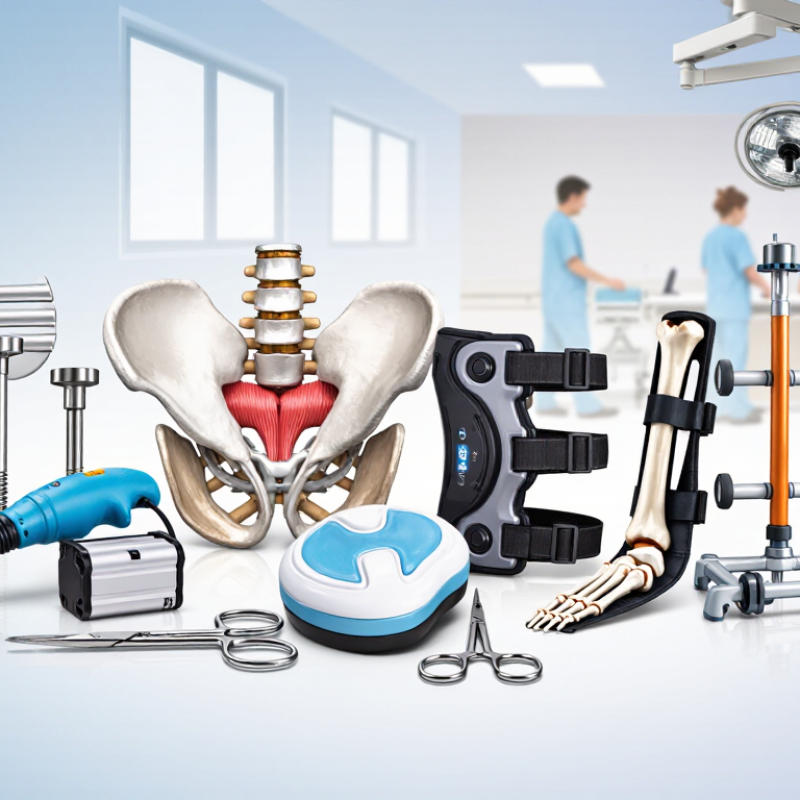
Common categories include joint implants, trauma plates, screws, intramedullary nails, spinal implants, arthroscopy tools, external fixators, bone graft substitutes, surgical power tools, and orthotic braces.

The need is substantial. The World Health Organization reports that about 1.71 billion people live with musculoskeletal conditions worldwide. Its rehabilitation reports also highlight widening demand as populations age.

Global buyers should assess more than product specifications. Clinical indication, material safety, fatigue strength, sterilization method, shelf life, and traceability deserve equal attention.

ISO 13485 certification can indicate a structured quality management system, while ISO 14971 supports documented risk management.

However, certification alone does not prove clinical suitability. Local registration, import requirements, labeling rules, and post-market reporting obligations must be checked in the destination country.

Evidence should guide the shortlist. The Global Burden of Disease Study 2019 identified low back pain as the leading cause of years lived with disability worldwide.

This supports demand for spinal and rehabilitation solutions, but market demand does not replace clinical evidence.

Buyers should request test reports, clinical data, supplier audits, and clear warranty terms.

A low unit price can still become expensive through revision surgery, training gaps, or unavailable replacement parts.

No scorecard is perfect. Procurement teams may still face uncertain evidence, inconsistent hospital preferences, and difficult logistics.
Classifying the Top 10 Orthopaedic Devices by Clinical Application

Top 10 Orthopaedic Medical Devices for Global Buyers

Classifying the Top 10 Orthopaedic Devices by Clinical Application

Clinical application provides a clearer buying framework than product popularity. The World Health Organization reports that musculoskeletal conditions affect about 1.71 billion people worldwide. For joint restoration, orthopaedic implants support hip and knee replacement. Trauma care uses plates, screws, intramedullary nails, and external fixation frames. Spinal procedures commonly require fusion cages and fixation systems. Arthroscopy systems serve minimally invasive diagnosis and repair. Surgical navigation improves alignment during complex procedures. Bone graft substitutes support selected fusion and fracture-healing cases. Orthoses stabilize weak joints, while prosthetic limbs restore mobility after amputation.

Procedure demand differs sharply between countries. OECD Health Statistics 2023 shows wide variation in hip and knee replacement rates across healthcare systems. This matters for inventory planning, surgeon training, and reimbursement assessment. A high-volume trauma hospital may prioritize modular fixation sets. A rehabilitation center may need adjustable orthoses and prosthetic components instead. Small details matter: sterile packaging, instrument compatibility, radiographic visibility, and storage conditions can affect daily use.

No list is perfect.

Clinical evidence should guide purchasing more than market forecasts. The FDA emphasizes risk-based controls, biocompatibility, and validated manufacturing for medical devices. Buyers should review peer-reviewed outcomes, regulatory documentation, supplier quality records, and post-market surveillance data. Lower prices may reduce budgets today but increase revision risks tomorrow. Local anatomy, surgical technique, and follow-up capacity also change device performance. This classification is practical, but it still needs clinical review.

Top 10 Orthopaedic Medical Devices for Global Buyers - Classifying the Top 10 Orthopaedic Devices by Clinical Application
Rank Device Category Primary Clinical Application Typical Anatomical Use Common Materials Typical Product Forms Key Clinical Benefits Important Buyer Evaluation Criteria
1 Total Joint Replacement Systems Replacement of severely damaged or arthritic joints Hip Knee Shoulder Titanium alloys, cobalt-chromium alloys, ultra-high-molecular-weight polyethylene, ceramic Femoral components, tibial trays, acetabular cups, glenoid components, bearing inserts Restores joint function, reduces pain, and supports mobility when conservative treatment fails Implant fixation options, wear performance, compatibility with surgical instruments, sizing range, sterilization, and long-term clinical evidence
2 Fracture Fixation Plates and Screws Internal fixation of traumatic fractures and osteotomies Upper limb Lower limb Pelvis Foot and ankle Stainless steel, titanium, titanium alloys, bioabsorbable polymers in selected applications Locking plates, compression plates, cortical screws, cancellous screws, cannulated screws Provides mechanical stability, maintains fracture alignment, and supports bone healing Plate contouring, locking mechanism, screw compatibility, fatigue strength, anatomical coverage, and instrument completeness
3 Intramedullary Nailing Systems Stabilization of long-bone shaft and selected metaphyseal fractures Femur Tibia Humerus Titanium alloys and stainless steel Antegrade nails, retrograde nails, interlocking screws, end caps, targeting guides Shares load along the bone axis, limits bending forces, and can permit earlier mobilization in appropriate cases Nail diameter and length range, proximal and distal locking options, radiographic visibility, instrumentation, and fatigue testing
4 Spinal Fixation and Interbody Devices Stabilization and fusion for degenerative, traumatic, deformity, and selected reconstructive conditions Cervical spine Thoracic spine Lumbar spine Titanium alloys, cobalt-chromium alloys, PEEK, and medical-grade polymers Pedicle screws, rods, plates, interbody cages, fusion spacers, and cross-connectors Restores spinal stability, helps maintain alignment, and creates conditions for bony fusion Compatibility across implant sizes, radiolucency for fusion assessment, construct strength, imaging compatibility, and surgical workflow
5 External Fixation Systems Temporary or definitive stabilization when internal fixation is unsuitable or must be delayed Open fractures Complex limb trauma Bone lengthening Stainless steel, titanium, carbon-fiber composite rods, and medical-grade polymers Monolateral frames, circular frames, hybrid frames, pins, wires, clamps, and struts Allows rapid stabilization, access to soft-tissue wounds, and postoperative frame adjustment Modularity, radiolucency, pin and wire options, frame rigidity, adjustability, cleaning requirements, and reusable instrument quality
6 Arthroscopy and Joint Repair Devices Minimally invasive diagnosis and treatment of intra-articular injuries Knee Shoulder Hip Ankle Stainless steel, titanium, PEEK, absorbable polymers, and suture materials Suture anchors, interference screws, meniscal repair devices, cannulas, shavers, and fluid-management accessories Supports tissue repair through small portals with reduced disruption to surrounding soft tissue Anchor pullout strength, suture quality, delivery ergonomics, compatibility with arthroscopy towers, and sterile packaging
7 Bone Graft Substitutes and Bone Void Fillers Filling contained bone defects and supporting bone regeneration or fusion procedures Spine Trauma Dental and maxillofacial Calcium phosphate, calcium sulfate, bioactive glass, demineralized bone matrix, and synthetic polymers Granules, putties, pastes, blocks, injectable formulations, and moldable strips Fills bone voids and may provide an osteoconductive scaffold for new bone formation Indications, handling time, resorption profile, packaging size, storage conditions, radiopacity, and clinical evidence
8 Orthopaedic Braces and Orthoses Non-surgical support, protection, alignment, and controlled motion of injured or unstable joints Knee Ankle Wrist Spine Neoprene, thermoplastic polymers, aluminum, carbon-fiber composites, foam, and textile materials Postoperative braces, functional knee braces, ankle-foot orthoses, wrist splints, and spinal orthoses Limits harmful movement, supports rehabilitation, and may reduce load or improve joint stability Fit range, adjustability, skin comfort, ventilation, durability, laterality, cleaning instructions, and pediatric or adult sizing
9 Orthopaedic Power Tools and Surgical Instruments Bone cutting, drilling, reaming, shaping, and implant preparation during orthopaedic surgery Trauma surgery Joint replacement Spine surgery Stainless steel, titanium, aluminum alloys, engineering polymers, and carbide cutting elements Electric or pneumatic drills, saws, reamers, burrs, drivers, cutting blades, and modular hand instruments Improves surgical precision, supports controlled bone preparation, and facilitates efficient implant placement Torque and speed control, battery or pneumatic compatibility, sterilization method, ergonomics, noise, maintenance, and accessory availability
10 Bone Growth Stimulation Devices Adjunctive treatment for selected delayed unions, nonunions, and spinal fusion procedures Long bones Spine Fracture sites Electronic components, insulated conductors, external coils, and biocompatible polymer housings External electrical stimulators, capacitive coupling systems, pulsed electromagnetic field devices, and implantable stimulation components Delivers physical stimulation intended to support bone healing as an adjunct to standard clinical management Indication-specific evidence, treatment schedule, battery life, patient compliance, electromagnetic compatibility, and service support
Note: The ranking is an application-oriented overview rather than a sales-volume ranking. Regulatory status, permitted indications, material specifications, and reimbursement conditions vary by country and product configuration. Buyer assessment should include applicable local registration, quality-system certification, biocompatibility, sterilization validation, clinical evidence, and post-market surveillance requirements.

Comparing Device Functions, Materials, Safety, and Performance

Top 10 Orthopaedic Medical Devices for Global Buyers

Comparing Device Functions, Materials, Safety, and Performance

Global buyers commonly evaluate joint implants, trauma plates, bone screws, intramedullary nails, spinal cages, external fixators, surgical drills, prosthetic limbs, bone graft substitutes, and orthopaedic braces. Each device solves a different clinical problem. A joint implant supports movement, while a fixation plate stabilizes a fracture. Spinal cages help maintain disc height. External fixators are useful when swelling or soft-tissue damage limits internal fixation.

Material selection directly affects strength, weight, corrosion resistance, and tissue response. Titanium alloys are lightweight and highly suitable for many fixation systems. Stainless steel offers dependable strength and easier cost control. Cobalt-chromium alloys can resist wear in selected joint applications. Polymer components may reduce weight, but long-term wear requires careful review. Performance data should include fatigue testing, dimensional accuracy, sterilization tolerance, and expected service life. Laboratory results are valuable, but they cannot predict every patient outcome.

Tips: Check intended use, material certificates, traceability, sterilization records, and independent test reports. Confirm that the supplier supports local regulatory requirements. Review packaging integrity, shelf life, and instructions for use. Ask how product changes are controlled. Small details matter. Clinical feedback should be current, not merely promotional. No comparison is perfect. Patient anatomy, surgical technique, and rehabilitation can change performance significantly. A device that looks efficient on paper may still need deeper evidence.

Evaluating Manufacturers, Certifications, Pricing, and Supply Capacity

Top 10 Orthopaedic Medical Devices for Global Buyers

Global buyers often compare joint implants, trauma plates, intramedullary nails, external fixators, spinal cages, bone screws, arthroscopy instruments, surgical power tools, bone graft substitutes, and patient-specific guides. Manufacturer evaluation should begin with documented production experience, material traceability, clinical evidence, and responsive technical support. ISO 13485 certification supports quality management, but it does not replace local regulatory approval. Check certificates directly, review their scope, and confirm expiry dates.

Pricing needs careful interpretation. A lower unit price may exclude sterilization, packaging, testing, freight, or after-sales training. Request a detailed quotation with minimum order quantities and payment terms. Assess supply capacity through monthly output, critical component sources, lead times, and backup production plans. Ask for batch records and sample inspection reports. From practical purchasing experience, delivery promises can age badly when forecasts are vague. A supplier may look strong on paper, yet struggle during urgent hospital demand. That risk deserves attention.

Tips: Compare at least three qualified manufacturers. Confirm product registration requirements in each destination market. Test samples before larger orders. Keep a written quality agreement. Do not rely on certificates alone. A useful audit can include factory photos, process records, calibration logs, and complaint-handling procedures. Pricing is only one part of value. Sometimes, the cheapest offer becomes expensive after delays, rejected batches, or missing technical documents. No checklist is perfect. Recheck assumptions before signing.

Selecting, Importing, and Managing Orthopaedic Devices Internationally

Top 10 Orthopaedic Medical Devices for Global Buyers

Selecting orthopaedic devices internationally requires more than comparing prices. The leading categories include joint replacement implants, fixation plates, bone screws, intramedullary nails, external fixators, spinal implants, arthroscopy instruments, surgical power tools, bone graft substitutes, and rehabilitation braces. Each device serves a different clinical need. Each also creates different import responsibilities.

Start with intended use, patient risk, and local registration requirements. Request technical files, test reports, sterilization records, shelf-life data, and clear instructions for use. Confirm whether the product is sterile, reusable, implantable, or powered.

Check packaging carefully. A crushed carton, unclear label, or missing lot number can delay customs clearance and compromise traceability.

Importers should also verify authorized distribution channels, product liability coverage, training support, and replacement-part availability.

Do not assume one approval works everywhere. Regulations, language rules, customs codes, and post-market reporting duties vary by country.

I have seen purchasing teams focus on unit cost while overlooking storage conditions or surgeon training. That mistake becomes expensive. A spreadsheet can miss clinical realities.

Before shipment, align the supplier, importer, hospital, and logistics provider on delivery terms, temperature limits, inspection steps, and complaint handling. Keep records for every lot. Review performance after installation, and admit when the original selection needs revision.