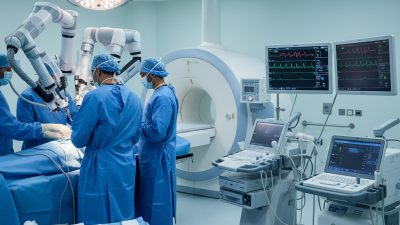

What counts as a top professional medical product depends on the setting, the people using it, and the patients it serves. A busy clinic may rely on accurate blood pressure monitors, reliable thermometers, and well-organized examination tools. A hospital ward may need patient monitors, infusion equipment, and dependable supplies for infection prevention. Details matter. One product rarely suits every care team.
This guide explores key categories of professional medical products, including diagnostic devices, monitoring equipment, protective supplies, mobility aids, sterilization tools, and everyday clinical consumables. It considers practical factors such as accuracy, ease of cleaning, durability, staff training, maintenance, and compatibility with existing workflows. A clear display, secure packaging, or comfortable grip can make a real difference during a demanding shift. Still, a polished specification sheet does not tell the whole story. No single list fits every facility, and product needs can vary with patient populations, budgets, and available support. Buyers should check intended use, manufacturer instructions, applicable quality information, and relevant local guidance before making decisions. The aim is not to declare one brand or device universally best. It is to help readers ask better questions and compare options with care. Even experienced teams can miss a small detail, such as replacement-part availability. That is worth remembering.

A professional medical product is defined by its intended use, evidence, and dependable performance—not by a polished package. It should meet relevant safety and quality requirements for the market where it is used. Documentation should clearly identify its purpose, limitations, cleaning needs, and maintenance schedule. Details matter. A device that is difficult to inspect or calibrate can create problems during a busy shift.
Good design supports real clinical work. Controls should be easy to understand while wearing gloves, and displays should remain readable under bright examination-room lights. Instructions need to be specific, especially for setup, routine checks, and troubleshooting. Staff training matters too. Even a well-designed product can be used incorrectly when guidance is vague or rushed.
Professional buyers can review performance data, applicable approvals, service arrangements, and product traceability before making a choice. They should also consider whether the product fits the people, environment, and workflow involved. A checklist helps, but it cannot capture every practical concern. I would still ask staff who use the equipment daily what feels awkward, fragile, or unclear. Their feedback may reveal gaps that a specification sheet misses.

Professional medical products span several categories, each supporting a different part of patient care. Diagnostic equipment includes thermometers, blood pressure cuffs, and examination lights. These tools help clinicians gather consistent observations during routine assessments.
Patient monitoring devices track measures such as heart rate and oxygen saturation. Their readings are useful only when staff understand the equipment and its limits.
Infection prevention products include gloves, masks, disinfectants, and sterilization supplies. Correct selection and use matter; packaging, storage conditions, and expiry dates deserve regular checks.
Surgical and examination instruments form another category, from forceps to reusable specula. Reprocessing instructions must be followed carefully for reusable items. Details matter.
Mobility and rehabilitation products, including walkers and transfer aids, can support safer movement when selected for the user and setting.
Choosing products begins with the clinical task, not a long shopping list. Consider ease of cleaning, staff training, maintenance needs, and compatibility with existing workflows. Ask qualified clinical and technical staff to review specifications and verify calibration requirements. A product that looks suitable on paper may be awkward in a crowded treatment room. Categories also overlap, and procurement plans are rarely perfect; periodic review helps identify gaps without assuming every facility needs the same equipment.
What Are the Top Professional Medical Products?
Essential Products for Diagnosis and Treatment
Reliable care starts with tools that give clear, timely information. A calibrated blood-pressure monitor, thermometer, pulse oximeter, and stethoscope support routine assessment. For clinics managing chronic conditions, glucose meters and their test strips help guide follow-up. The right choice depends on patient needs, staff training, and whether replacement parts are available. A useful device that sits broken on a shelf is not useful.
Treatment also relies on practical equipment: oxygen-delivery devices, suction units, infusion pumps, wound-care supplies, and personal protective equipment. Each needs clear instructions, routine cleaning, and a maintenance plan. The World Health Organization’s 2023 Universal Health Coverage monitoring report estimated that 4.5 billion people were not fully covered by essential health services in 2021. Access to appropriate diagnostic and treatment tools is one part of closing that gap.
Quality deserves equal attention. WHO reports that about one in ten medical products in low- and middle-income countries is substandard or falsified. Procurement should therefore check regulatory status, performance evidence, storage needs, and consumable availability. Keep records. It sounds dull, but it matters. A device’s accuracy can drift, and even a good checklist may miss a mismatch between equipment and local workflow. Teams should review performance in real use, not just at purchase.
Common diagnostic tools help clinicians measure key adult health indicators. Bars show typical reference ranges, not device specifications.
Adult reference ranges shown: body temperature (°C), systolic blood pressure (mmHg), oxygen saturation (%), fasting blood glucose (mg/dL), and resting heart rate (bpm). Units differ between rows, so the bar lengths are not directly comparable. Reference values vary by individual and clinical guidance; this chart is educational, not a diagnosis.
What Are the Top Professional Medical Products?
Quality and safety evaluations begin with the product’s intended use. A device used for routine monitoring has different risks from one used in sterile procedures. Reviewers examine design records, material specifications, manufacturing controls, and test results. They also check whether instructions explain setup, cleaning, storage, and known limitations. Evidence should match the claims being made. A smooth finish alone proves little.
Tips: Check the package seal, lot number, and expiry date where applicable. Confirm that instructions fit the care setting. Ask for relevant testing or quality records, and note unclear answers. Do not judge safety by appearance alone.
Practical checks matter, too. A product may perform well in a controlled test yet prove awkward during a busy shift. Reviewers can observe setup, read error messages, and assess whether users can follow instructions without guesswork. Complaints and performance trends after release may reveal problems that initial testing missed. No checklist is perfect. I would question any evaluation that treats a passing test as proof of zero risk; results need context, and uncertainty should be documented.
| Product Category | Typical Professional Use | Key Quality Evaluation | Important Safety Checks | Examples of Applicable Standards or Controls |
|---|---|---|---|---|
| Surgical gloves | Barrier protection during surgical procedures. | Assessment of dimensions, physical strength, freedom from holes, packaging integrity, and consistency between production lots. | Verify sterile packaging, appropriate sizing, material suitability, and labeling about potential sensitivities. Check package integrity before use. | Applicable requirements may include ASTM standards for surgical gloves, validated sterilization processes, and the manufacturer’s quality-management controls. |
| Medical examination gloves | Hand protection during examinations and routine patient-care tasks. | Evaluation of barrier integrity, fit, durability, and performance appropriate to the intended use. | Confirm whether gloves are sterile or non-sterile as required; select material suitable for the task and user; follow single-use labeling where applicable. | Applicable requirements may include ASTM specifications for medical gloves and jurisdiction-specific medical-device regulations. |
| Surgical masks | Source control and splash or droplet barrier protection in clinical settings. | Testing can include bacterial filtration, differential pressure, fluid resistance, and construction or fit-related checks, depending on the applicable specification. | Check that the mask is intended for the task, fits securely, and is replaced when wet, damaged, or contaminated, in line with instructions and local protocols. | ASTM F2100 is an example of a performance specification used for medical face masks in the United States; regulatory requirements vary by jurisdiction. |
| Pulse oximeters | Non-invasive estimation of blood oxygen saturation and pulse rate. | Review validation data, measurement accuracy under specified conditions, repeatability, and performance across relevant patient populations. | Assess alarms and usability where applicable; account for factors that can affect readings, such as motion, poor circulation, and measurement limitations described in the instructions. | IEC 80601-2-61 is an example of a particular standard for basic safety and essential performance of pulse oximeter equipment. |
| Infusion pumps | Controlled delivery of fluids or medicines to patients. | Evaluate flow-rate accuracy, alarm performance, software controls, usability, and reliability under specified operating conditions. | Check occlusion and air-in-line protections where applicable, alarm audibility, power-failure behavior, and compatibility with the specified administration set. | IEC 60601-2-24 is an example of a particular standard for the basic safety and essential performance of infusion pumps and controllers. |
| In vitro diagnostic tests | Analysis of human specimens to support screening, diagnosis, or treatment decisions. | Assess analytical performance, including accuracy, precision, sensitivity, specificity, detection limits, and robustness for the intended use. | Review specimen handling, quality-control procedures, result interpretation, user training needs, and the consequences of false-positive or false-negative results. | Applicable controls may include jurisdiction-specific authorization, validated performance studies, and laboratory quality requirements; requirements depend on the test and setting. |
| Steam sterilizers | Processing reusable instruments and other compatible medical items. | Evaluate cycle performance, temperature and pressure control, record accuracy, and documented validation for the intended load and process. | Verify that items are compatible with the cycle; use appropriate monitoring and release procedures; investigate failed or incomplete cycles before releasing loads. | ISO 17665 is an example of a standard addressing development, validation, and routine control of moist-heat sterilization of health-care products. |
| How to compare products: Confirm the intended use, applicable regulatory authorization, independent or validated performance evidence, manufacturing quality controls, clear labeling, and post-market safety information. Standards and regulatory requirements differ by product and jurisdiction; a standard reference alone does not establish that a product is suitable for every clinical use. | ||||
The right medical product depends on where care happens and who will use it. In acute-care hospitals, reliable patient monitors, infusion equipment, and sterile supplies support fast-paced clinical work.
WHO’s 2022 Global report on infection prevention and control offers a sobering benchmark. It estimates that about 7 of every 100 acute-care patients in high-income countries acquire at least one healthcare-associated infection. In low- and middle-income countries, the estimate is 15 of 100. Easy-to-clean surfaces and clear maintenance instructions matter.
Outpatient clinics often need compact diagnostic tools, examination lights, and protective equipment that staff can restock quickly. In long-term care, stable mobility aids, pressure-relief products, and simple call systems may better match residents’ daily needs. Fit matters. A device that works well in a large ward can be awkward in a narrow home-care space. Staff training, cleaning time, storage, and replacement parts should shape procurement decisions—not just the product specifications.
Infrastructure also changes what is practical. A 2023 WHO/UNICEF report found that about one in five healthcare facilities worldwide lacked basic water services in 2021. In settings with limited water access, product choices must account for safe cleaning and waste handling. No checklist can replace a site assessment. I would be cautious about assuming that a technically advanced device is automatically the best choice; sometimes, its upkeep is the weak point. Before purchasing, measure doorways, check power access, and ask frontline staff to test the workflow.
|
This is a medical device. |