

Choosing the best type of leg splint starts with the injury, not the product label. A fractured lower leg, a sprained ankle, and a weak foot may need very different support. A rigid posterior splint can limit movement after serious trauma. An ankle-foot orthosis may help control foot drop during walking. A hinged design can provide support while allowing carefully controlled motion.
Fit matters just as much.
Orthopedic surgeon Dr. James Andrews offers a useful principle: “The best way to treat an injury is to prevent it.” That idea applies to leg splints, but prevention does not mean immobilizing every painful leg. A splint that presses against a swollen calf may create new problems. A loose splint may slide when the wearer stands. Even a well-designed device can fail when worn over bulky clothing or adjusted too tightly.
Clinical experience shows that comfort, alignment, padding, and adjustability deserve equal attention. The best leg splints should support the injured area without causing numbness, skin color changes, or increasing pain. They should also match the wearer’s daily needs, such as sleeping, walking short distances, or managing stairs.
Still, no single splint suits everyone. That is the uncomfortable part. Product descriptions often sound certain, while real injuries are not. A qualified clinician should assess circulation, swelling, skin condition, and suspected fracture before recommending a specific design. This guide compares common leg splints, explains their practical differences, and considers where each option may fall short. The final choice should support healing safely, not simply look sturdy.
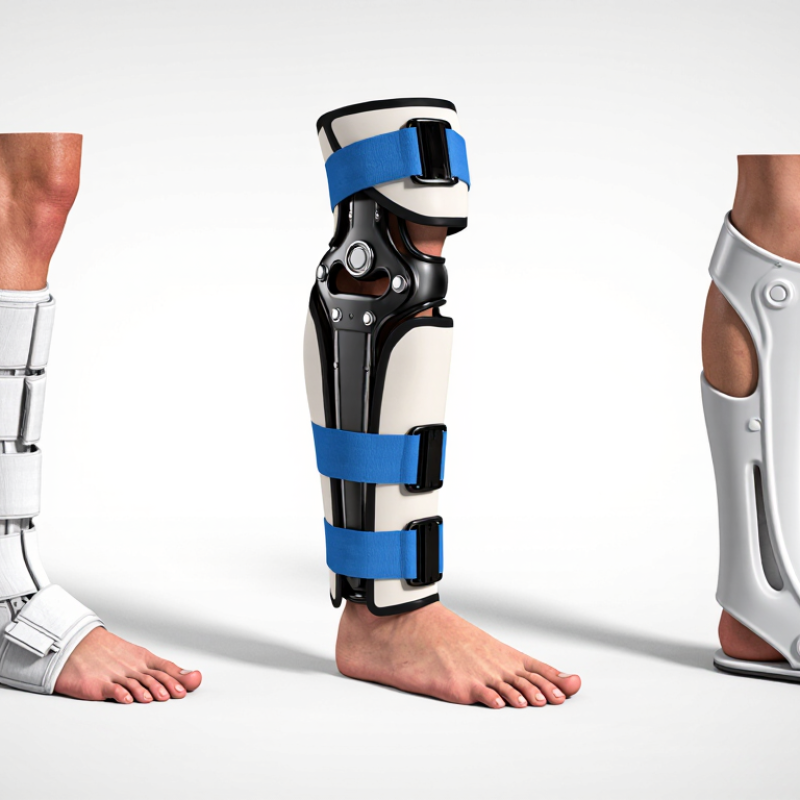
A leg splint is a temporary support that limits movement after an injury. It can protect a suspected fracture, severe sprain, dislocation, or surgical area. Splints are also used during transport when swelling may increase. Unlike a full cast, many splints leave room for swelling and later examination.
The best type depends on the injury, swelling, and the person’s condition. A rigid splint offers strong stability for possible fractures. A padded posterior splint supports the leg while allowing swelling around the front. An adjustable splint may help medical staff check circulation more easily. Pneumatic designs can provide gentle pressure, but excessive pressure is unsafe. A trained clinician should choose and apply the splint whenever possible.
Tips: Keep the injured leg still and supported. Check the toes for unusual color, coldness, numbness, or increasing pain. Loosen nothing unless a clinician advises it. Seek urgent medical care after a serious injury, especially when bone appears deformed or the foot feels weak. A common mistake is treating a splint as a complete solution. It only protects the area temporarily. Even a well-fitted splint can cause harm if it becomes tight, wet, or displaced. The safest choice is not always obvious. Assessment matters.
What Is the Best Type of Leg Splint?
How Different Leg Splint Types Compare
No single leg splint suits every injury. The right choice depends on fracture location, swelling, circulation, and transport time. The World Health Organization’s Global Status Report on Road Safety 2023 estimates 20–50 million nonfatal road injuries each year. Many require careful temporary immobilization before imaging or surgery.
Rigid splints provide strong motion control and work well when alignment must remain stable. However, they can press against swollen tissue and create painful pressure points. Air splints apply even compression and are lightweight, but overinflation may reduce circulation. Check the toes repeatedly. Vacuum splints mold closely around irregular legs and usually support comfort during transport. They need a pump and trained handling. Traction splints may help selected femoral shaft injuries, but incorrect placement can worsen pain or neurovascular problems.
The American College of Surgeons’ Advanced Trauma Life Support guidance emphasizes immobilization, repeated circulation checks, and reassessment after movement. That detail matters. A splint can feel secure while the foot becomes cold, pale, or numb. Fit matters. In practice, clinicians should compare stability with swelling tolerance, skin protection, and access to monitoring. The “best” type may change within an hour. A rigid device may suit initial alignment, while a vacuum model becomes more comfortable during longer transport. That trade-off matters.
| Splint Type | Primary Area Supported | Common Clinical Uses | Motion Controlled | Relative Support Level | Weight-Bearing Potential | Key Advantages | Important Limitations |
|---|---|---|---|---|---|---|---|
| Posterior Ankle Splint | Lower leg, ankle, and foot | Short-term stabilization of ankle injuries, suspected fractures, severe sprains, and soft-tissue swelling | Limits ankle movement, especially upward and downward motion | High | Usually non-weight-bearing or limited weight-bearing until medically assessed | Accommodates swelling better than a fully circumferential cast; relatively quick to apply | Does not provide complete rotational control; requires careful padding and circulation checks |
| Stirrup Ankle Splint | Both sides of the ankle | Lateral ankle sprains, ankle instability, and protection during early recovery | Restricts side-to-side ankle movement while allowing some up-and-down motion | Moderate | Often permits protected weight-bearing when recommended by a clinician | Provides focused support around the ankle and can be easier to walk in than a rigid posterior splint | Less suitable for injuries requiring strict immobilization or substantial control of the foot and lower leg |
| Knee Immobilizer | Knee joint and surrounding leg | Temporary stabilization after certain knee injuries, patellar dislocation, or selected post-injury situations | Restricts knee flexion and extension, generally keeping the knee near full extension | High | May allow limited walking with appropriate support, but this depends on the injury and medical instructions | Simple design and strong control of knee movement | Can be uncomfortable, may cause stiffness, and is not intended for unrestricted long-term use without follow-up |
| Hinged Knee Brace | Knee joint | Selected ligament injuries, knee instability, and rehabilitation when controlled movement is desirable | Allows a prescribed range of knee motion while limiting excessive bending, straightening, or side-to-side stress | Moderate to High | Often supports functional walking when permitted and correctly fitted | Provides adjustable motion control and can support progressive rehabilitation | Not appropriate for every acute injury; hinges must align with the knee and straps must be fitted correctly |
| Long-Leg Splint | From the thigh to the ankle or foot | Temporary immobilization of injuries involving the knee, lower leg, or multiple connected areas | Restricts movement at the knee and may also limit ankle motion | High | Typically non-weight-bearing until the injury has been evaluated | Controls movement across a larger section of the leg and can help maintain alignment during transport | Bulky and difficult to walk in; may increase pressure points if not padded and monitored |
| Short-Leg Walking Boot | Foot, ankle, and lower leg | Selected stable fractures, significant sprains, tendon injuries, and protected recovery after evaluation | Limits ankle movement and shields the foot and ankle from some external forces | Moderate to High | May permit weight-bearing if specifically authorized by a healthcare professional | Removable, protective, and generally more practical for daily mobility than a full cast | Can alter walking mechanics; fit and use should be reviewed if pain, numbness, or skin irritation develops |
| Ankle-Foot Orthosis (AFO) | Lower leg, ankle, and foot | Foot drop, selected neurologic conditions, chronic ankle weakness, and gait support | Controls ankle position and may reduce unwanted foot movement during walking | Moderate | Designed to support walking when prescribed and fitted for the individual | Can improve foot positioning and reduce toe dragging in appropriate users | Usually requires professional assessment and footwear compatibility; it is not a substitute for acute fracture management |
| Dynamic Foot-Drop Splint | Ankle and foot | Selected cases of foot drop or reduced active ankle lifting during gait | Assists ankle dorsiflexion while allowing a more natural walking pattern than a fully rigid device | Low to Moderate | May support walking, depending on muscle strength, balance, and the underlying condition | Can improve toe clearance and may be lighter or more flexible than rigid orthoses | Provides limited protection against acute trauma and may not suit severe weakness or instability |
| Sugar-Tong Leg Splint | Lower leg and ankle | Temporary stabilization of selected lower-leg or ankle injuries when swelling is expected | Limits ankle movement and reduces some rotational movement of the lower leg | High | Generally non-weight-bearing until evaluated and cleared | Can accommodate swelling and provide more rotational control than some single-sided splints | More complex to apply; requires careful monitoring for pressure, swelling, and circulation changes |
The best splint depends on the injury, swelling, stability, skin condition, circulation, and treatment plan. A healthcare professional should determine the appropriate device, fit, and weight-bearing instructions, especially when a fracture, dislocation, severe pain, numbness, or reduced circulation is suspected.
Choosing a leg splint starts with the injury, not the product shape. A posterior short-leg splint suits many acute ankle or lower-leg injuries. It allows room for swelling. A sugar-tong splint limits ankle movement from both sides. It may help selected fractures or severe sprains. A long-leg splint supports injuries involving the knee, tibia, or femur. It requires careful assessment. The World Health Organization reports about 684,000 fatal falls globally each year.
For a stable ankle sprain, an ankle stirrup can control side-to-side movement while allowing limited walking. Fractures should be excluded first. A knee immobilizer may support acute patellar or ligament injuries, but prolonged use can stiffen the joint. Suspected femoral-shaft fractures need emergency assessment and trained traction splinting. Improvised devices are unsafe. CDC STEADI materials report about three million older adults visit U.S. emergency departments after falls annually.
The best fit leaves the toes visible and avoids pressure on the heel. Check warmth, color, sensation, and swelling before and after application. Increasing pain, numbness, or pale toes needs prompt medical review. AAOS guidance and emergency-care protocols emphasize these neurovascular checks. Real injuries are messier than charts. Swelling changes. Diagnosis changes. I would not choose a splint from pain location alone. Imaging, circulation, skin condition, and mobility goals also matter.
What Is the Best Type of Leg Splint?
The best leg splint balances comfort, support, and safe movement. It should match the injured area and your daily needs. A comfortable splint has smooth edges, breathable padding, and adjustable straps. Tight pressure can cause numbness, swelling, or painful skin marks. Good support keeps the leg aligned without making movement impossible. A rigid design may protect a fracture, while a flexible brace can suit mild instability. The right choice depends on the injury, healing stage, and advice from a qualified clinician.
Safe movement deserves careful attention. A physiotherapist or doctor should check the fit and walking pattern. During fitting, the heel should remain positioned correctly, and the toes should stay warm and pink. Try standing, sitting, and taking a few slow steps. A splint that feels secure in bed may restrict stairs. That trade-off is easy to miss. Stop using it and seek professional advice if pain increases, circulation changes, or the skin breaks.
Tips: Measure the leg according to the fitting instructions. Wear a clean, thin sock beneath the splint. Check your skin after removing it. Keep straps firm, not painfully tight. Use walking aids if recommended. Do not adjust a prescribed splint without guidance. Comfort can improve after small changes, but persistent discomfort needs review.
This indicative 1–5 comparison reflects common design characteristics: higher support improves stabilization, while higher comfort and movement safety generally favor lighter designs that preserve controlled mobility. A stirrup ankle splint provides the most balanced combination for many stable ankle injuries, while sugar-tong and knee immobilizer designs prioritize restriction and support.
Choosing the best leg splint depends on the injury, swelling, pain level, and required movement control. A rigid splint can limit movement after a suspected fracture. A padded immobilizer may suit severe pain around the knee or lower leg. An adjustable support can help mild strains, but it should not replace medical assessment. The best option is the one that stabilizes the injured area without blocking circulation.
Check the skin, sensation, and swelling before applying it. Cover open wounds with a clean dressing. Keep the leg in its natural position unless it looks severely deformed. Place padding between the skin and splint, especially near the ankle and bony areas.
Secure the splint above and below the injury, but leave the toes visible. Not too tight. After application, check for coldness, numbness, pale or blue skin, and increasing pain. Loosen the straps if these signs appear.
A common assumption is that tighter means safer. It does not. Recheck the leg every 15 to 30 minutes, because swelling can increase quickly. Avoid walking unless a healthcare professional permits it. Do not try to straighten a visibly deformed leg.
The uncomfortable part is accepting that a splint provides temporary support, not a diagnosis. Seek urgent medical care for severe pain, exposed bone, uncontrolled bleeding, loss of sensation, or a cold foot.
|
This is a medical device. |